News
Coalition Politics and the Johannesburg Dilemma: A View of the Week
As coalitions reshape Johannesburg’s governance, residents face ongoing challenges with services and accountability. Explore the city’s coalition dilemma.
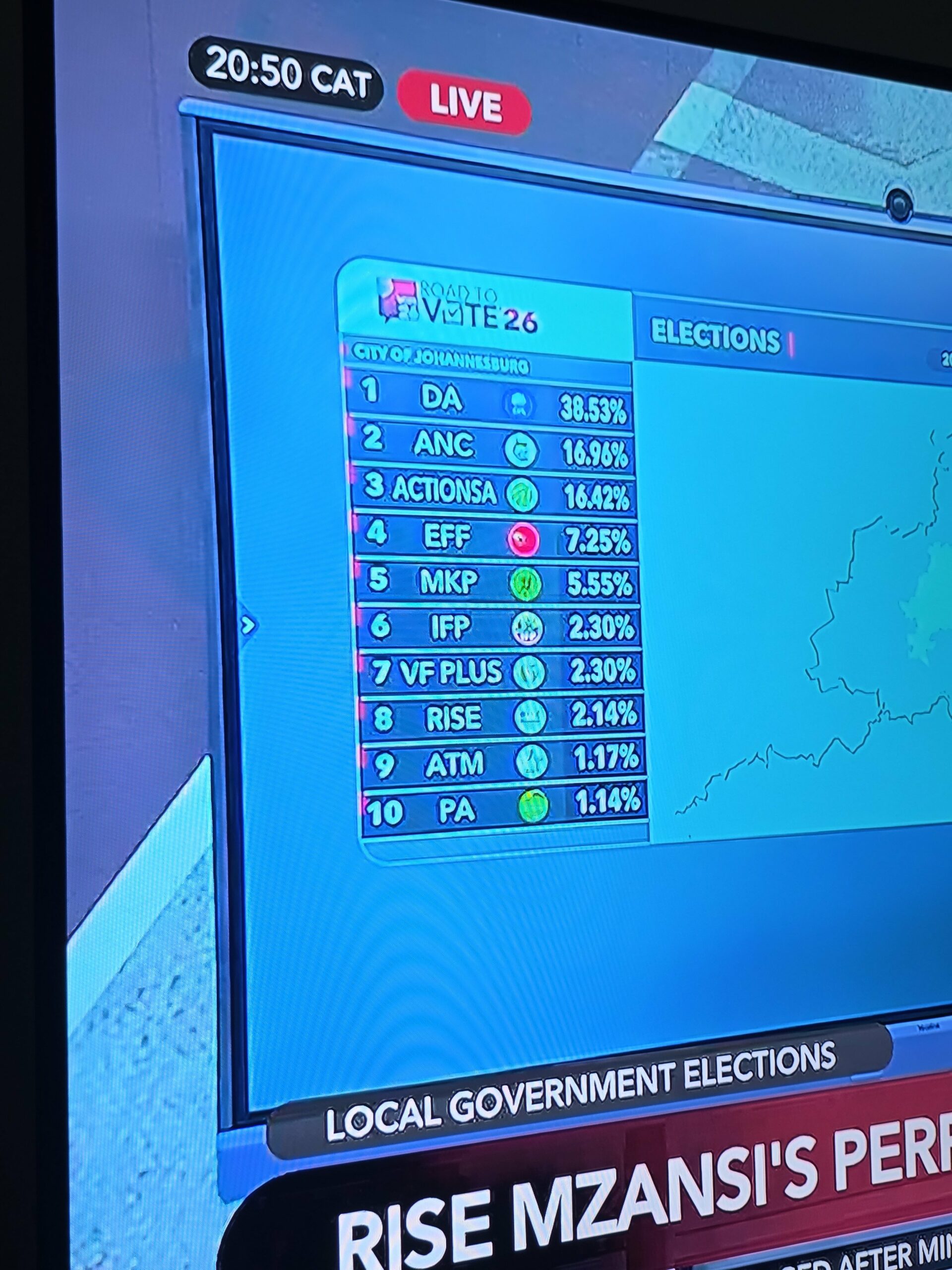
The Impact of Local Elections on Johannesburg’s Governance
Johannesburg residents emerged from the latest voting day confronted not only by their decisions at the polls but also by the city’s ongoing service delivery woes. As ballots were cast, daily reminders of uncollected waste, dry taps, and persistent power interruptions underscored the importance of effective governance in South Africa’s largest urban centre.
The Coalition Conundrum
The 2026 local elections reflect a trend that has grown over the last decade: coalition governments are increasingly defining municipal rule. Many voters, faced with the failures of service delivery and leadership, are expressing a growing sense of frustration, often more certain of who they will not vote for than who truly deserves their support.
The prevailing dilemma has set the stage for coalitions, where several partiesrather than a single outright winnerattempt to form functioning governments. Discussions have even surfaced about the possibility of extending national unity-style coalitions, seen at higher levels of government, to local municipalities across South Africa. Particular focus rests on whether key players such as the ANC and DA can reach working arrangements, while the actions of influential provincial leaders add uncertainty to these efforts.
Lessons from a Decade of Coalitions
Over the past ten years, the pitfalls of coalition politics have become increasingly apparent. One notable misstep has involved larger parties handing control to smaller allies in order to cling to power. This practice has raised questions over whether political self-interest often takes precedence over representing citizens’ needs. Many residents and commentators have come to believe that some parties are willing to compromise good governance simply to remain in office, regardless of the consequences for ordinary people.
Coalitions have seen parties with only a small share of the vote holding significant influence, sometimes leading to questionable decision-making and disrupted services. At the same time, established players like the ANC continue to face criticism for their role in forming and enabling these coalitions, even as they argue that the abundance of players leads to a lack of clear accountability.
Accountability in a Multi-Party System
Figures like ANC secretary-general Fikile Mbalula have stated outright that “coalitions do not work in South Africa”. With too many leaders vying for a seat at the table, lines of responsibility become blurrier than ever. Yet this is not a problem isolated to one factionmany of the party’s main opponents have also spent years lobbying for majority rule and warning against the dilution of leadership.
The continued fracturing of votes makes it increasingly likely that future city and municipal governments will be formed by uneasy alliances. As these coalitions often rely on minority parties to keep their grasp on power, their ability to govern effectively frequently suffers.
The Voter’s Role in Shaping Outcomes
Despite the rocky legacy of coalition governments, a substantial proportion of voters continue to act as if their chosen party might win alone, overlooking the practical necessity of partnerships. Many fail to consider what their vote means if their preferred party ultimately has to cooperateor even hand powerto rivals. This can cause further frustration when voters find their vote contributing to outcomes or alliances they did not anticipate or want.
- Voters may be disappointed if their chosen party enters an alliance with another seen as responsible for current problems.
- It raises the important question: should voters reconsider their choices if promised improvements do not follow, or if their party enables poor governance through coalitions?
- Loyalty or habitual voting, without deeper thought, can perpetuate cycles of blame and stagnation.
Responsibility Beyond the Ballot
Effective democracy not only requires voters to hold office bearers accountable but also to reflect on their own choices and their consequences. If discontent with political outcomes persists, it may be necessary for citizens to evaluate their decision-making and ask whether their electoral strategy leads to real progress or simply perpetuates cycles of instability and inadequate service.
As Johannesburg continues to endure service failures and fraught council proceedings, these reflections are more pertinent than ever. Coalition governments, for now, remain the dominant realitybut so, too, does the need for both politicians and the public to pursue accountability and pragmatic improvement.
Follow Joburg ETC on Facebook, Twitter, TikTok and Instagram
For more News in Johannesburg, visit joburgetc.com
Source: citizen.co.za