News
Andrea Johnson will keep pension but no golden handshake, says Justice Minister
Justice Minister Mmamoloko Kubayi says Andrea Johnson will retain her pension after resigning as IDAC head but will not receive a golden handshake; Presidency confirms acceptance.
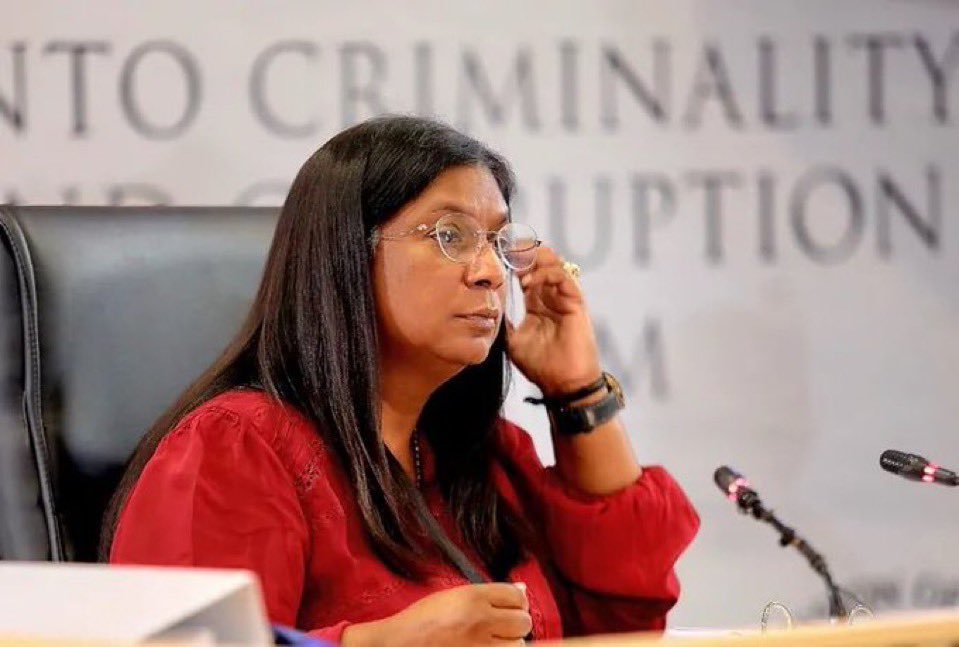
Andrea Johnson will retain her pension benefits but will not receive a “golden handshake” after her resignation as head of the Investigating Directorate Against Corruption (IDAC), Justice Minister Mmamoloko Kubayi said on Radio 702.
Presidency accepts resignation
The Presidency confirmed on Monday that President Cyril Ramaphosa had accepted Johnson’s immediate resignation. Presidency spokesperson Vincent Magwenya said Ramaphosa’s decision followed a recommendation by Kubayi and by National Director of Public Prosecutions (NDPP) Andy Mothibi that Johnson’s request be granted.
“Adv. Johnson directed her request for an immediate release from office to the National Director of Public Prosecutions and President Ramaphosa,” Magwenya said.
Magwenya added that the President “thanked Johnson for her years of service in the National Prosecuting Authority (NPA) and as head of IDAC,” and that the President “assures the leadership and staff of the NPA of the government’s unwavering support for its work in the fight against crime and corruption.”
Kubayi: resignation was in the best interests of institutions
Speaking on The Clement Manyathela Show, Kubayi said she welcomed Johnson’s resignation and that the department had supported the recommendation to accept it.
“We looked at it ourselves as the department and also believed that, indeed, in the best interests of IDAC, the NPA and the credibility of the prosecution team, we [needed] to recommend acceptance of the request,” Kubayi said.
Kubayi cited public concern and Johnson’s own view that “IDAC and the NPA are bigger than her” as reasons for the recommendation. She said organisations must “endure beyond individuals” and warned against allowing “individuals to become the source of the destruction of organisations.”
On suspension, confidentiality and next steps
Kubayi declined to comment when asked whether she had recommended Johnson’s suspension prior to the resignation, saying conversations between ministers and presidents are confidential. She said what is public is what has been agreed upon and that the department had considered Johnson’s request to accept the resignation.
Kubayi said she and Mothibi would hold a media briefing on Thursday to “outline what we have done until now and what issues still need to be addressed” and to “outline how we intend to rebuild public confidence in the institution.”
Benefits, disciplinary processes and casework
Asked whether Johnson would receive a “golden handshake” or retain retirement benefits, Kubayi said there was no legal basis to withhold benefits Johnson had earned.
“When a person resigns, like any employee, they decide to leave and the employment relationship ends. I have no legal standing to withhold any payments [to which] she is entitled. Labour laws still apply to her,” Kubayi said.
She added that disciplinary proceedings become academic once an employee resigns, explaining that the ultimate outcome of a disciplinary process is dismissal and that a person who resigns cannot be forced to stay so the process can be completed.
Kubayi also addressed whether other IDAC cases would be reviewed beyond matters involving Crime Intelligence, saying that was not the intention and noting that Section 38 advocates had been appointed on a contract basis to assist with many cases.
She said some accused persons had made representations to the NDPP, but those had been rejected, which she said indicated oversight of the work and that the cases were not expected to collapse.
Reasons in Johnson’s resignation
In her resignation letter, Johnson said the past five months had been exceptionally difficult and that much of the criticism related to IDAC’s investigations into senior Crime Intelligence officials. She said although the allegations against her remain unproven, a lengthy inquiry into her fitness for office would be costly and would distract from IDAC’s anti-corruption work, particularly while South Africa remained under Financial Action Task Force (FATF) scrutiny.
Johnson had applied for retirement after 30 years of service and asked that her resignation take effect within 24 hours by agreement.
Ongoing oversight and complaints
Johnson’s departure followed intense scrutiny at the Madlanga Commission of Inquiry, where she withdrew remarks about Brigadier Dineo Mokwele, admitted IDAC had no legal basis to investigate Lieutenant General Dumisani Khumalo in one matter, and conceded the unit should not have sought public complaints to initiate an investigation.
Complaints against Johnson are being considered by the IDAC Oversight Judge, and further complaints have been lodged with the Legal Practice Council and the IDAC Ombud.
Follow Joburg ETC on Facebook, Twitter, TikTok and Instagram
For more News in Johannesburg, visit joburgetc.com
Source: iol.co.za