News
Cabinet approves court rationalisation: 20% more judges and five new local High Court seats
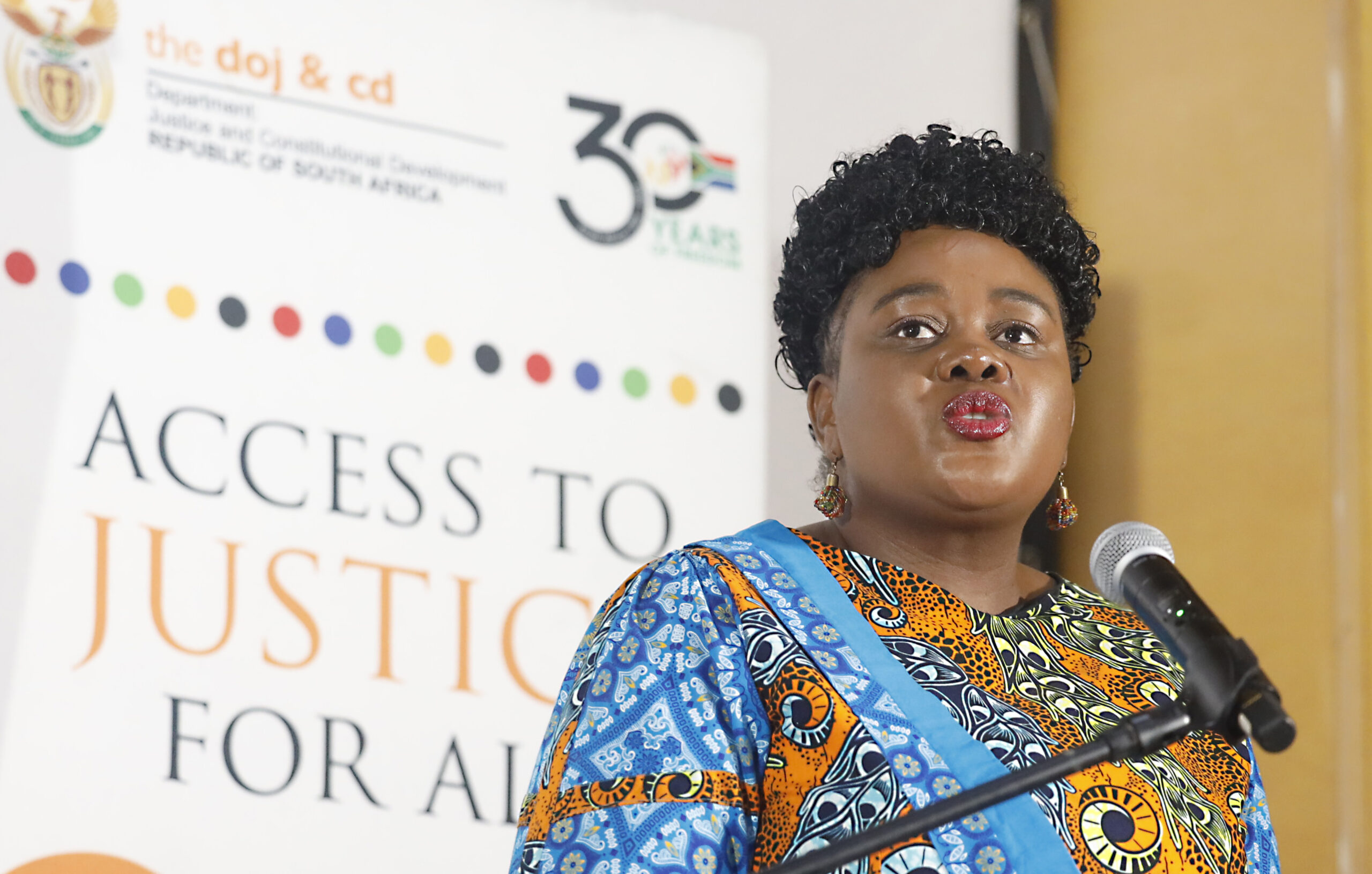
Cabinet has approved plans to rationalise South Africa’s courts, setting in motion the creation of new local High Court seats and a 20% increase in judicial posts aimed at improving access to justice for remote and disadvantaged communities.
What was announced
Minister of Justice and Constitutional Development Mmamoloko Kubayi told a media briefing that cabinet has approved the rationalisation committee’s report and given the department the go-ahead to begin implementation. The committee that produced the report was chaired by former chief justice Dikgang Moseneke.
New seats and judicial expansion
The rationalisation recommendations include establishing new local High Court seats in:
- Gauteng at Palm Ridge
- Free State at Welkom
- North West at Rustenburg
- Northern Cape at Upington
- Western Cape at Thembalethu
The phase two report also recommends a 20% increase in judicial appointments, a review of guidelines for acting judges, and the possible abolition of recess periods for judges.
Implementation phases and timelines
Kubayi said implementation will happen in two phases. Phase 1 will apply recommendations on magisterial district and sub-district jurisdictions for High Court main and local seats to enhance access to justice. The minister said that gazetting the use of existing infrastructure for local seats begins on 1 July 2026, allowing additional courts to become operational without building new courthouses. She also said revised acting judges’ appointment guidelines, signed by the Chief Justice, will be gazetted and take effect from 1 July.
Phase 2 focuses on the phased roll-out of new local seats by building new courts and expanding existing magistrates’ courts, and on implementing the recommended increase in judicial posts. Kubayi said a process with Treasury and the Chief Justice’s office has begun to implement the 20% increase in judicial posts.
Background and the committee’s work
The rationalisation committee was established in June 2021 by then minister Ronald Lamola to rationalise areas under the jurisdiction of the High Court divisions. The committee received submissions from the department, the Office of the Chief Justice, all High Court divisions, the Magistrates Commission, the National Prosecuting Authority, Legal Aid South Africa, and the Legal Practice Council.
The committee completed its work in two phases. The first-phase report was submitted on 15 July 2023 and recommended defining magisterial districts and sub-districts and specifying jurisdictions for main and local seats. Phase two was completed on 20 August 2025 and focused on the rationalisation of judicial establishments to ensure a fair distribution of judicial posts.
The department has previously implemented rationalisation of magisterial districts in several provinces in stages: Gauteng and North West in 2014; Limpopo and Mpumalanga in 2016; Northern Cape in 2018; and the Eastern Cape, Free State, KwaZulu-Natal and Western Cape in 2022.
Other decisions and next steps
The committee recommended relocating the Eastern Cape High Court seat from Makhanda to Bhisho; Kubayi said the recommendation will be considered after consultations with key stakeholders in the province. She also said the executive will not pronounce on judges’ recesses because that falls within the Chief Justice’s mandate.
The minister said steps have begun to establish a Kempton Park court next to OR Tambo International Airport. Kubayi noted that “though this initiative is not part of the recommendations of the rationalisation committee, we believe that the circumstances, especially regarding immigration, demand that we act swiftly to create the necessary infrastructure and justice systems to attend to this important matter,” as she put it during the briefing.
Access to justice the driving aim
Kubayi framed the rationalisation as a correction of an inherited court system that, she said, continues to impede access to justice for remote communities and those from the former homelands. In her remarks she said,
“These communities are frequently forced to travel long distances, at a huge cost, to access courts.”
She concluded by stressing the need to centre access to justice as the department consolidates court administration and judicial governance and works towards merging magistrates and judges into a single judiciary.
Follow Joburg ETC on Facebook, Twitter, TikTok and Instagram
For more News in Johannesburg, visit joburgetc.com
Source: citizen.co.za