News
Manamela warns SETAs: obstruct oversight and face consequences
Higher Education Minister Buti Manamela says SETAs that obstruct oversight or misuse public funds will face consequences as government resets governance and performance.
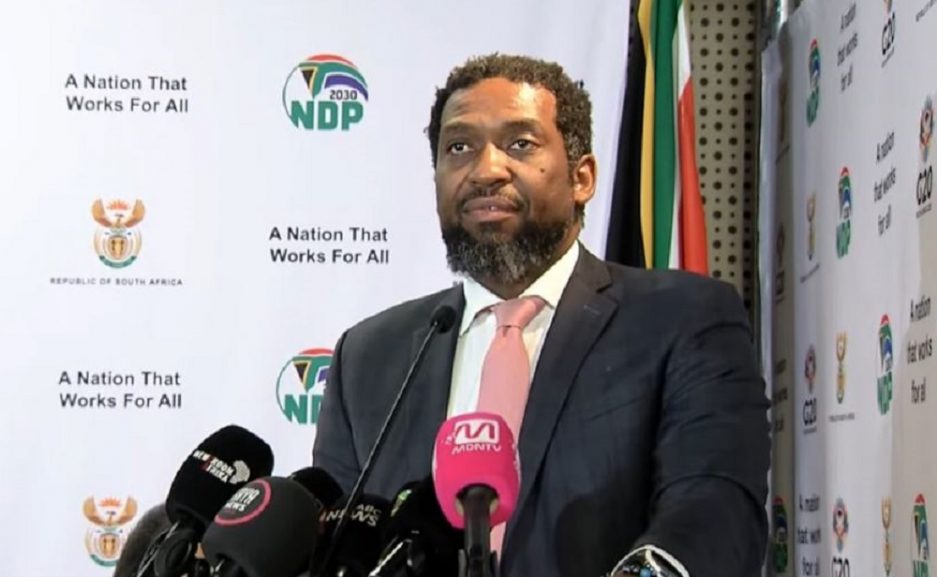
Higher Education and Training Minister Buti Manamela has warned Sector Education and Training Authorities (SETAs) that institutions that obstruct oversight, misuse public resources or persistently fail to perform will face consequences. He made the remarks while addressing the induction of newly appointed SETA accounting authorities and chief executives in Boksburg on Thursday, calling the programme the start of a governance and performance reset.
Zero tolerance for obstruction and misuse
Manamela said institutions that cooperate with oversight bodies and address weaknesses would receive support, but those that undermine accountability would be met with action. He warned: “Where there is obstruction, concealment, persistent non-performance, the misuse of public resources, or defiance of lawful oversight – there will be consequences.”
The minister said interventions already undertaken were statutory measures to protect public resources and restore confidence, and not politically motivated.
“Those interventions were not political. They were statutory measures to protect public resources and restore confidence in the system. I would rather we never needed them again. Good governance is not measured by the absence of crisis. It is measured by the leaders who prevent one.”
Recent interventions and oversight
Manamela noted that government has previously intervened in several SETAs after governance failures. He named the Services SETA, the Construction Education and Training Authority (CETA) and the Local Government SETA (LGSETA) as having been placed under administration following concerns about governance, oversight and institutional instability.
According to IOL, Manamela had referred governance concerns at the Media, Information and Communication Technologies SETA (MICT SETA) to the National Skills Authority (NSA) for an urgent assessment to determine whether any interventions were needed to safeguard governance and institutional stability.
Shifting the focus: outcomes over activity
Manamela said the government would move the skills system away from measuring success by activities such as programme launches, contracts signed or money spent, and instead judge institutions on whether interventions produced meaningful outcomes that support employment, productivity and developmental goals.
He described the broader reform as a “Skills Revolution” aimed at transforming fragmented institutions into a coordinated system focused on employment and productivity. The minister said SETAs should be seen as strategic economic institutions and should be judged on closing skills gaps, expanding workplace-based learning and helping people into sustainable employment.
Strengthening the National Skills Authority
Manamela said the NSA must become an evidence-based centre for skills development reforms and that its oversight role must be respected. He warned:
“No SETA, no Accounting Authority, no Chief Executive, and no official will be permitted to ignore, frustrate or disrespect the National Skills Authority when it is lawfully performing its functions.”
The minister said the NSA would be strengthened to improve research, labour-market analysis, governance assessments, monitoring and evaluation, and that a more structured relationship would be introduced between the NSA, the Department of Higher Education and Training and SETAs, including governance guidelines, performance reviews and codes of conduct.
Standards and responsibilities
Manamela warned against role interference among chairs, board members and executives, and against practices that frustrate oversight such as delayed documents, unanswered correspondence or selective disclosure.
“Delay is not cooperation. Partial cooperation is not cooperation. And respect for lawful oversight is not optional.”
He reminded accounting authorities and chief executives that their appointments carried public responsibility: “Your appointment is not an administrative honour. It is a public duty.”
What comes next
Manamela said he intended to remain closely engaged with the sector, supporting institutions that perform while acting where governance, performance or public trust is at risk. He said administration was an exceptional intervention, not a governance model, and stressed the need for institutions to be ethical, coordinated and capable of delivering meaningful change.
According to IOL, the publication has also described itself as one of South Africa’s leading news and information websites bringing readers updates on politics, current affairs, business, lifestyle and other topics.
Follow Joburg ETC on Facebook, Twitter, TikTok and Instagram
For more News in Johannesburg, visit joburgetc.com
Source: iol.co.za