News
Fikile Mbalula tells Khampepe Commission he did not influence TRC investigations
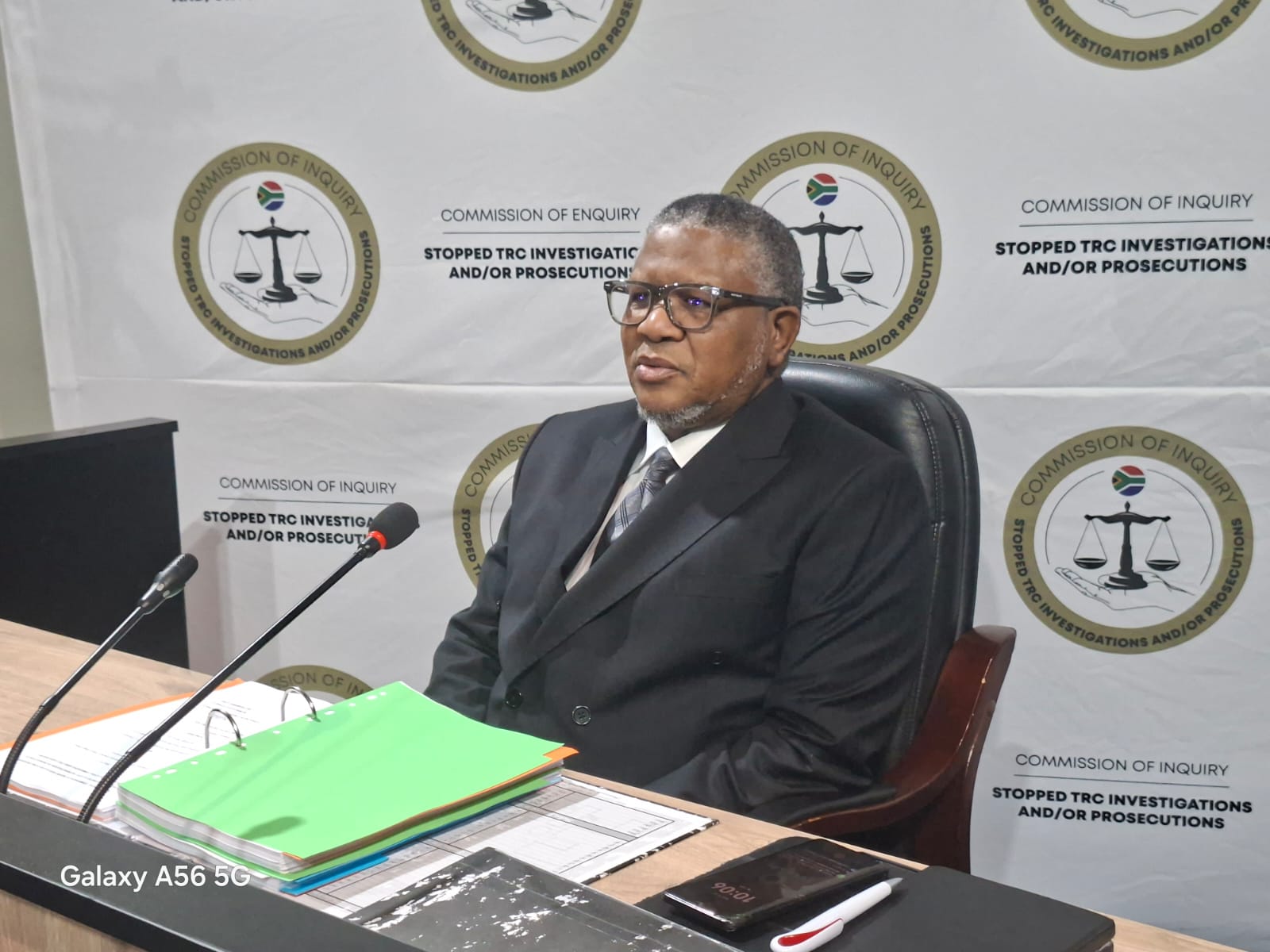
Former police minister and ANC secretary-general Fikile Mbalula told the Khampepe Commission he did not influence investigations into Truth and Reconciliation Commission (TRC)‑related cases during his time in office. The testimony was given at the commission this week, with the proceedings adjourned shortly after his evidence-in-chief.
Ministerial role described as policy, not operations
Mbalula, who served as deputy minister of Police from 2009 to 2010 and as minister of Police from March 2017 to February 2018, said he was not involved in investigation processes concerning TRC cases. “The minister is responsible for policy, and not operations within the police portfolio,” he told the commission.
He added:
“The minister of Police therefore has no legal authority to determine the investigation of cases and/or direct investigations of criminal cases. The minister plays no role in the allocation of operational resources to the investigation of criminal cases.”
Mbalula cited the Constitution in explaining his understanding of the role, quoting:
“Section 206, subsection 1 of the Constitution provides that a member of the Cabinet must be responsible for policing and must determine national policing policy after consulting the provincial governments.”
Questions on 2009 DPCI decision and specific TRC matters
Advocate Howard Varney, representing families affected by the cases, pressed Mbalula about a reported 2009 request concerning the appointment of investigators for two TRC-related matters. Varney asked whether Mbalula had heard of a report alleging a DPCI decision to commence TRC cases after the 2010 World Cup.
Mbalula replied:
“I never had such a decision. From what you are presenting, council, it is quite clear that they seem to be saying that only the Directorate for Priority Crimes Investigation (DPCI) would be better placed to answer what informed this decision.”
Historic case and reparations comments
The commission also discussed the case of Ahmed Essop Timol, an anti-apartheid activist who died in police custody in 1971. Mbalula said he could not recall any delays regarding that matter.
On complaints from families about reparations and processes for victims of apartheid-era crimes, Mbalula said reparations should be paid but argued the processes must be followed legally. He said:
“I think we must follow the processes to the letter in relation to outstanding matters, and one of those is the matter of compensation, which has to be addressed in the right way. I, too, was part of the contingent of people who can be characterised as victims of the past. In this regard, if we address matters and conflate these with other issues, it will raise expectations. We need to be clear about what we are doing here.”
Proceedings adjourned
Wednesday’s sitting was adjourned shortly after Mbalula’s evidence-in-chief when a witness scheduled to testify was declared medically unfit to proceed. The commission will resume on Thursday.
Follow Joburg ETC on Facebook, Twitter, TikTok and Instagram
For more News in Johannesburg, visit joburgetc.com
Source: iol.co.za