News
Judge questions whether Ramaphosa expects his word to outweigh evidence in Phala Phala impeachment fight
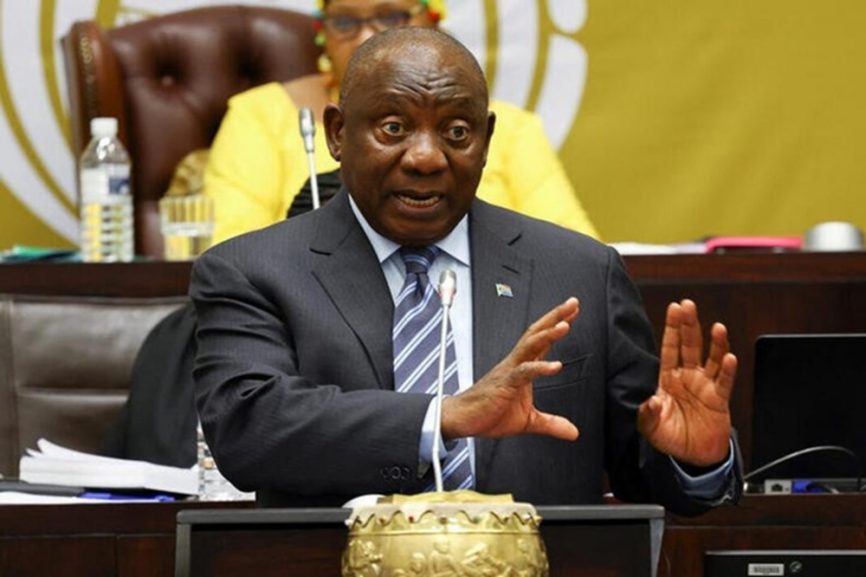
President Cyril Ramaphosa is seeking to pause Parliament’s impeachment process while he asks the High Court to review the independent panel report into the theft of cash from his Phala Phala farm, and during urgent court proceedings a judge questioned whether the president expects his version to carry greater weight than the evidence against him.
Courtroom exchange over whose evidence should prevail
During Wednesday’s hearing, Western Cape High Court Judge André le Grange said he was getting the impression that “the president thinks that, listen here, my evidence [that] I give must weigh heavier than all this, as he terms it, hearsay evidence from his accusers.”
Advocate Wim Trengove SC, appearing for the president, told the court Ramaphosa’s indignation at being “confronted by evidence of undisclosed origin” was an “understandable human reaction,” but said he was not arguing that the president’s evidence should automatically count for more.
“I’m not suggesting that his evidence should count more than the incriminating evidence,” Trengove said. “But what I am suggesting is that the panel owed it to him under the rules, at least to have regard to his evidence, and, in the light of his evidence, to say, well, is there enough to take the momentous step of going to a public inquiry.”
What the president is asking the court to do
Ramaphosa wants the impeachment process paused until the High Court decides his separate application to review and set aside the report of the independent panel chaired by former chief justice Sandile Ngcobo. The review hearing is set down for September 2 to 4, according to IOL.
The Ngcobo panel found in November 2022 that the president had a prima facie case to answer over the theft. Trengove told the court the panel applied the wrong question by using a prima facie test rather than asking whether there was sufficient evidence to justify a public inquiry against a sitting president.
Judges probe legal test and role of committee
The matter is before a full bench comprising Judges André le Grange, Matthew Francis and Diane Davis. The bench challenged Trengove’s argument, with one judge pointing to paragraph 141 of the Constitutional Court’s May 8 judgment on the panel’s role.
Trengove described that passage as a passing remark; a judge disagreed, saying, “Is it a passing remark? If you read it in context, it can hardly be a passing remark.” The bench also queried what role would remain for the impeachment committee if the panel were required to apply a higher legal test.
Arguments on delay, jurisdiction and scope of relief
Trengove rejected allegations that the application was an attempt to evade accountability, describing such claims as “baseless and politically motivated.” He said the president sought only a limited postponement of the commencement of public hearings.
The court must first determine whether the application is urgent and whether the High Court has jurisdiction to grant the relief sought in light of the Constitutional Court’s order that referred the Ngcobo panel report to an impeachment committee.
Opposing parties and courtroom atmosphere
The application is opposed by impeachment committee chairperson Makashule Gana, the ATM, the EFF and the MK Party. Advocate William Mokhare SC for Gana was presenting arguments at the time IOL filed its report.
Outside court, MK Party deputy president John Hlophe said the president was “wasting the court’s time,” arguing that the Constitutional Court’s ruling left no further appeal. IOL reported that the fourth, sixth and seventh respondents described the application as an “abuse of process, frivolous or vexatious,” and that some respondents seek costs against the president, with requests for punitive costs orders from the sixth and seventh respondents.
Background: the Phala Phala matter
According to IOL, the Phala Phala matter dates to 9 February 2020, when at least US$580,000 in cash was stolen from Ramaphosa’s game farm near Bela-Bela. The theft became public in June 2022 when former SSA director-general Arthur Fraser laid criminal charges and alleged the money had been hidden in furniture and that the theft was covered up.
IOL reported that Ramaphosa admitted the theft occurred but denied wrongdoing, saying the money came from the sale of buffaloes to Sudanese businessman Hazim Mustafa. The president reported the theft to General Wally Rhoode, head of his Presidential Protection Unit, rather than opening a case at a police station, saying he did not want to cause panic.
The Ngcobo panel found prima facie evidence that Ramaphosa may have committed a serious violation of the law and serious misconduct, including that he may have breached a legal duty to report the theft to the police. In December 2022 the ANC voted not to adopt the panel’s report; that decision was set aside by the Constitutional Court in May, which ordered the report referred to an impeachment committee. A 31-member multiparty impeachment committee was later constituted under Gana in a Parliament where the ANC no longer holds a majority following the 2024 general election, IOL reported.
Reporting note
According to IOL, the article summarised developments in the Western Cape High Court as the president seeks to pause the impeachment process pending a review of the Ngcobo panel report.
Follow Joburg ETC on Facebook, Twitter, TikTok and Instagram
For more News in Johannesburg, visit joburgetc.com
Source: iol.co.za