News
Motlanthe warns ‘the thieves are dominant’ as he lays bare governance crisis
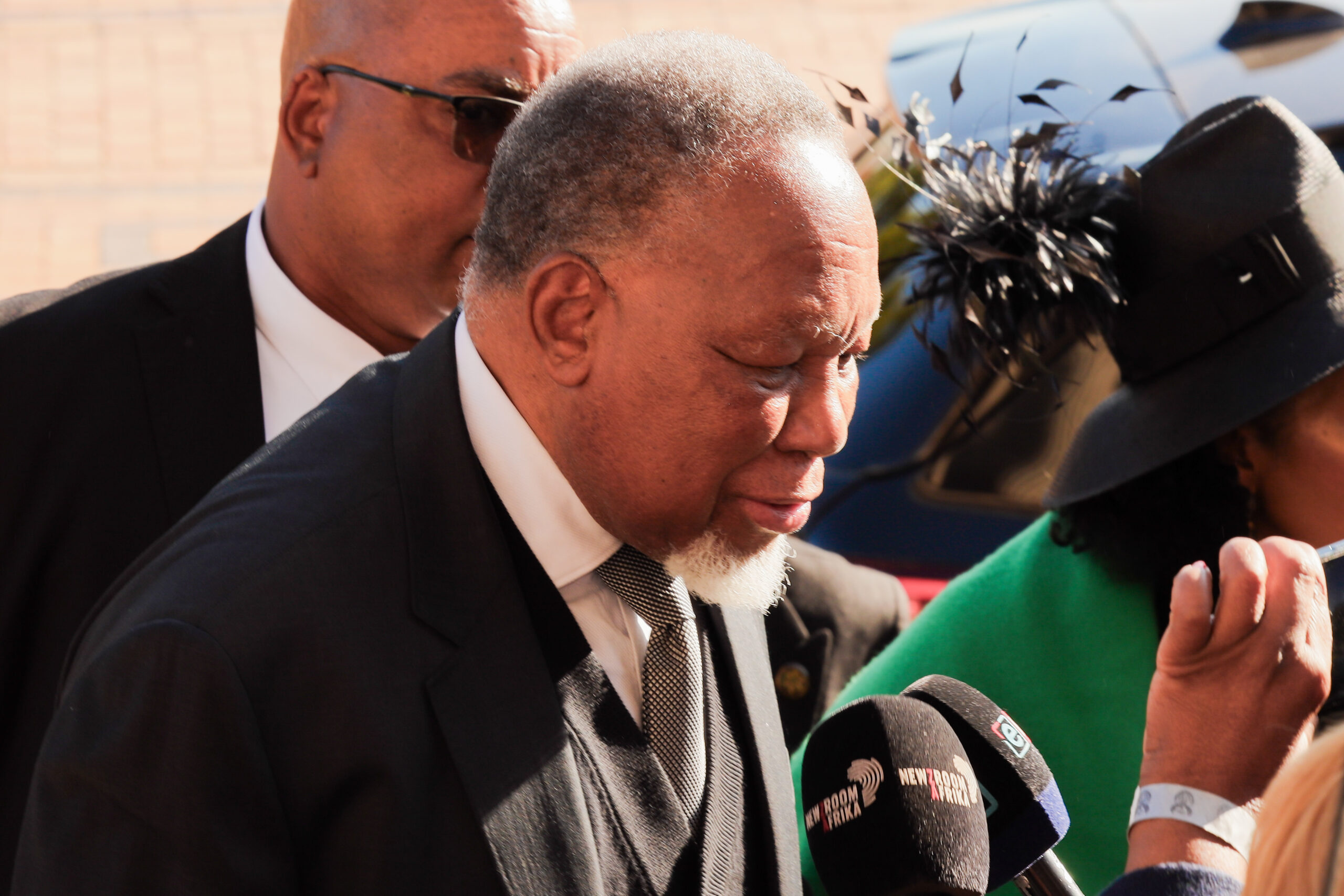
Former president Kgalema Motlanthe delivered a stark assessment of South Africa’s governance failings at an Ahmed Kathrada Foundation event, saying unchecked corruption, institutional decay and factional politics are “stopping development” and eroding democratic trust.
Plainspoken diagnosis at Lenasia event
Speaking at the Ahmed Kathrada Foundation’s Legacy Fundraising Breakfast Series event titled The State of South Africa Today, Motlanthe addressed civil society leaders, business figures and community representatives at Rooftop Café and Padel in Lenasia. He warned of a “dangerous weakening of accountability mechanisms,” and described a widening gap between elected officials and the everyday realities of South Africans.
Service delivery example underlines his point
Motlanthe used a personal anecdote to illustrate his argument. During a morning walk he noticed a severe water leak pushing through the tar of a road. He said he called the Mayor of Johannesburg, gave exact coordinates and was told a repair team would attend immediately. “Three months later, I walk past the same spot,” he told attendees. “The water is still pushing out of the tar. Nothing was done.”
He said an engineer proposed a risk-free arrangement to isolate and repair such leaks, with payment drawn from savings generated by recovered water. According to Motlanthe, the city never responded.
Patronage, not competence, he says, drives appointments
Motlanthe argued the collapse in service delivery stems from a failure to separate a temporary government from the permanent state. He said political parties routinely replace skilled public servants with political loyalists, hollowing out institutional memory. “Administration bureaucracy is very, very important,” he said. “You can’t have a capable state if you don’t have the right people in the bureaucracy.”
Describing the appointment process, he said it is structured to produce patronage rather than competence: “The line function minister invites two colleagues and the three of them conduct the interview. Transparency begins and ends with an ad for that post, thereafter, nobody knows what happens. The panellists already know who they want to appoint anyway.”
He pointed to Auditor-General reports showing a large share of municipal revenue is consumed by contracted service providers brought in because senior officials lack capacity. Many, he said, “can’t even read the financial reports” placed before them.
Sharp critique of the ANC’s internal changes
Motlanthe reserved some of his strongest remarks for the ANC, saying leadership removed anti-corruption provisions from the party’s constitution between its 53rd and 54th national conferences. He said clauses that made it an offence to purchase memberships or raise unregulated campaign funds were quietly removed.
On internal manipulation, he said: “The thieves are prominent… the thieves are dominant,” and cited the fabrication of thousands of fraudulent memberships in provinces including Mpumalanga to influence internal contests.
Why he remains in the party
Asked why veteran figures remain in a party he criticised, Motlanthe recalled an analogy from when he became ANC secretary-general: “To lead this organisation, you must have two hearts. Because if you have only one heart, they will finish it completely. And if you have no heart, you are disheartened and you despair. You need the second heart to kick in at that point when your first heart is finished and you want to give up. The second heart will say: ‘Don’t give up on them, try to correct them.'”
He added: “We see these things, we call them out, we stay there. We become a problem, but a good problem, so that when the manipulation is planned, they must work overtime to get around you.”
Calls for systemic reform and active citizenship
Looking forward, Motlanthe argued South Africa needs systemic reform rather than rhetoric. He called for an overhaul of basic education, warning that an obsession with academic qualifications is depriving the economy of technical skills. “The assumption that all children must become academics must be done away with,” he said. “None of us feels that our children must become plumbers or electricians. We think they must become academics and theorists. So the schooling system must begin to produce the skills that are needed by the economy.”
He also urged active citizenship that extends beyond elections, saying voters should look past party slogans and elect “principled, qualified individuals who are genuinely rooted in their communities.” On public confidence, he said: “Slogans no longer matter. You can’t restore confidence and trust by merely having stories. It’s the deeds that must speak for you.”
Context of declining trust
Motlanthe’s remarks come amid broader concern over public confidence in state institutions. The article notes that recent Afrobarometer data has recorded declining trust in key democratic structures, a trend linked by scholars and civil society to state capture, governance failures and perceived selective accountability.
Follow Joburg ETC on Facebook, Twitter, TikTok and Instagram
For more News in Johannesburg, visit joburgetc.com
Source: iol.co.za