News
South Africa’s unemployment rate climbs to 33.6% as youth joblessness worsens
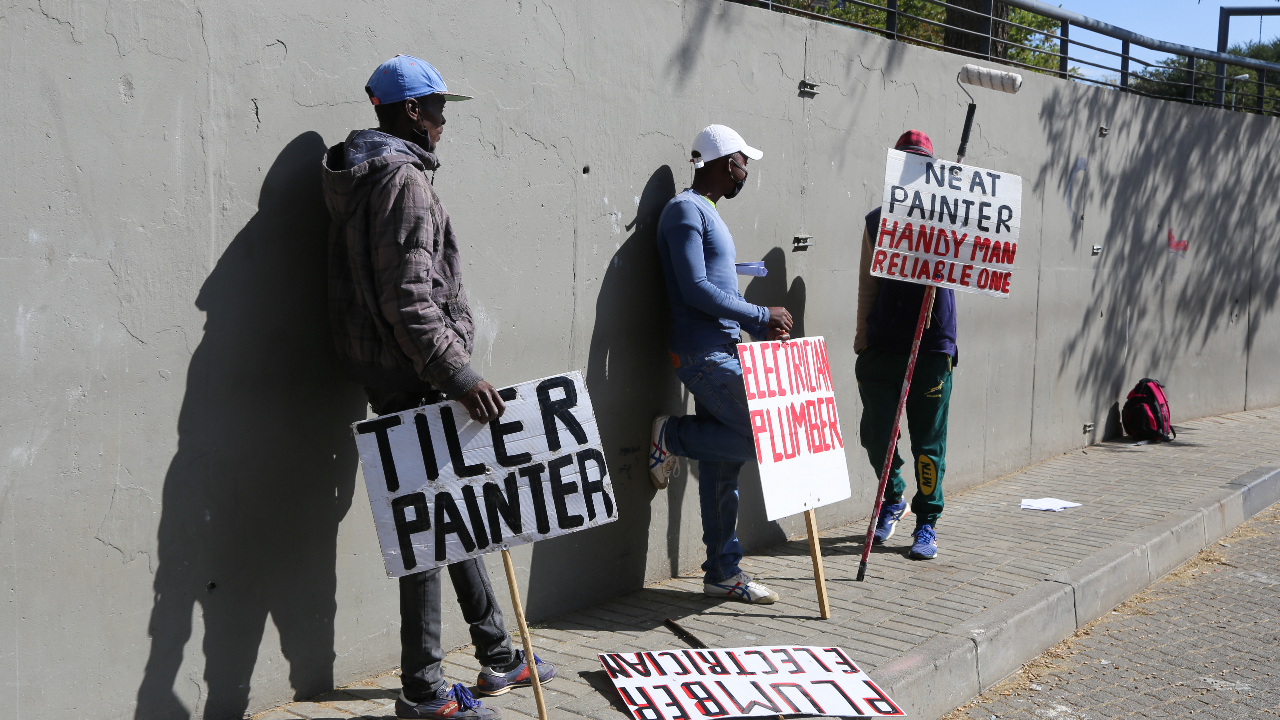
South Africa’s jobs crisis has deepened, with the official unemployment rate rising to 33.6% in the second quarter of 2026, up from 32.7% in the first three months of the year.
The latest Quarterly Labour Force Survey (QLFS) paints a difficult picture of the country’s labour market. Between the first and second quarters, the number of unemployed people increased by 345,000 to 8.5 million, while employment fell by 16,000 to 16.7 million.
Together, those changes pushed the labour force up by 329,000 people.
For millions of South Africans, the figures reflect a reality that extends beyond statistics: more people are looking for work while fewer opportunities are available.
Youth unemployment remains a major concern
The most worrying figures continue to come from young South Africans.
The number of unemployed people aged between 15 and 34 increased by 264,000 to 5 million during the second quarter. At the same time, youth employment declined by 40,000 to 5.6 million.
That combination pushed the youth unemployment rate to 47.4%, an increase of 1.5 percentage points from the previous quarter.
For young people entering the labour market, the figures underline how difficult it remains to secure a first job, build experience and establish financial independence.
Labour underutilisation tells a bigger story
The headline unemployment figure does not capture everyone struggling to find sufficient work.
The broader measures of labour underutilisation also deteriorated. The combined unemployment and time-related underemployment rate rose to 36.6%, while the measure combining unemployment with the potential labour force increased to 43.8%.
The broadest measure, LU4, remained unchanged at 46.3%.
These measures include people who may be working fewer hours than they want or who are available for work but are not fully engaged with the labour market.
Fewer discouraged job-seekers
Interestingly, the number of discouraged job-seekers declined during the quarter.
There were 227,000 fewer discouraged job-seekers, bringing the total down to 3.7 million. Other available job-seekers fell by 49,000 to 861,000, while unavailable job-seekers declined by 4,000 to 44,000.
As a result, the potential labour force decreased by 280,000 to 4.6 million.
The number of people outside the labour force for other reasons, however, increased by 72,000 to 12.5 million.
Trade and construction provide some relief
Not every part of the economy recorded job losses.
Employment increased most noticeably in trade, which added 70,000 jobs, followed by construction with 39,000 and finance with 11,000.
However, these gains were outweighed by losses elsewhere.
Community and social services recorded the biggest decline, shedding 57,000 jobs. Mining lost 26,000 positions, while agriculture and manufacturing each recorded declines of 15,000.
The figures suggest an uneven labour market, with employment opportunities growing in some industries while contracting sharply in others.
Western Cape among provinces recording job losses
The provincial picture was equally mixed.
Mpumalanga recorded the largest increase in employment, adding 41,000 jobs, followed by the Eastern Cape with 13,000 and the Free State with 9,000.
The Western Cape recorded a decline of 48,000 jobs, the largest provincial decrease during the quarter. Gauteng followed with a loss of 22,000, while North West recorded a decline of 15,000.
For a province where many households depend heavily on formal employment and services, the decline will be closely watched.
Informal sector bucks the trend
The formal and household sectors both recorded employment declines during the quarter.
Formal-sector employment fell by 41,000, while the household sector declined by 9,000.
The informal sector moved in the opposite direction, adding 34,000 jobs.
That shift highlights the continuing importance of informal work as people search for ways to earn an income despite weaker opportunities in parts of the formal economy.
Follow Joburg ETC on Facebook, Twitter, TikTok and Instagram
For more News in Johannesburg, visit joburgetc.com