News
SACCUSA warns: Jobs at risk if South Africa loses AGOA access
The South Africa AGOA question now has a date attached, and it is Monday 2 November. For the United States to cut South Africa from its duty-free trade programme from 1 January 2027, it has to announce that decision by then. That leaves six days, Joburg Etc reports.
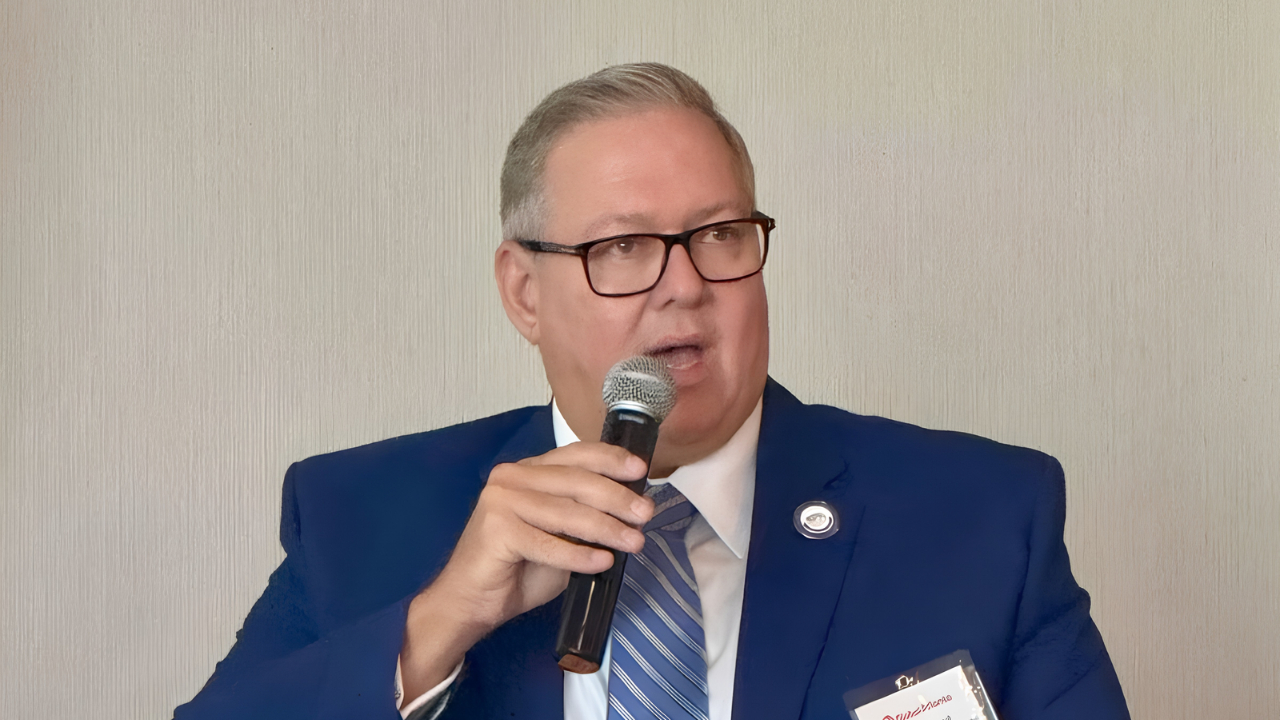
A group of South African business leaders based in Washington is using that time to send Pretoria a message. In a statement issued today, the South African Chamber of Commerce in the USA (SACCUSA) says the country faces a credible risk of exclusion. Its president, Neil Diamond, put it bluntly: ‘We are facing a $16 billion question.’
The South African Chamber of Commerce in the USA (SACCUSA) has issued an urgent warning to the South African government that the country faces a credible risk of losing its preferential trade benefits under the African Growth and Opportunity Act (AGOA), despite the recent extension of the program until December 2028.
SACCUSA President Mr Neil Diamond has called on the South African government to make the preservation of AGOA eligibility and the strengthening of US–South Africa trade relations an immediate national economic priority.
#sabcnews
Sherwin Bryce-Pease (@sherwiebp) October 27, 2026
What AGOA does and where it stands
The African Growth and Opportunity Act (AGOA) lets eligible African countries sell thousands of products to America without paying import duties. Bill Clinton signed it on 18 May 2000. President Donald Trump signed an extension on 2 September 2026 that carries it to 31 December 2028, according to BusinessTech. Roughly 22 percent of South Africa’s exports to America benefit from the programme.
South Africa had lobbied for 15 years, so two years falls well short, according to the Sunday Times. The extension also carries no guarantee of a seat at the table. The American president reviews eligibility every year, and the trade representative’s office opened its 2027 review in June. Any removal needs 60 days’ notice, which is how 2 November became the magic date.
Trade representative Jamieson Greer has already called South Africa a ‘unique problem’, so the worry has been building for months.
Ramaphosa tells South Africans to prepare
President Cyril Ramaphosa raised the alarm himself last week. Speaking to editors in Johannesburg on Monday 19 October, he said it remains unclear whether South Africa will stay in the programme and that talks with American counterparts continue, according to BusinessTech.
‘I need, as president, to prepare us if it ever happens,’ he said.
He described the impact on jobs as ‘devastating’. He and Deputy President Paul Mashatile have been travelling to line up other buyers, and he pointed to China’s zero-tariff scheme for qualifying South African goods, introduced in May.
How many jobs hang on AGOA depends on who is counting. Briefly News puts it at about 250 000, mostly in the automotive, agricultural and clothing sectors, while other estimates reach half a million. Carmakers alone account for around 86 000 direct jobs, rising to 125 000 with subcontractors, according to Africanews.
The Western Cape feels it first
No province has more riding on this. Between 2018 and 2022 the Western Cape supplied 49 percent of South Africa’s agricultural exports to America by value, according to National Agricultural Marketing Council figures cited by the Mail & Guardian. Think of Citrusdal’s orchards, the Winelands’ cellars and the packhouses in between.
Terry Gale, chief executive of Exporters Western Cape, laid out the numbers in an open letter to Ramaphosa published on 22 October. Provincial exports to America fell 41 percent over the latest 12-month period, from R16.89 billion to R10.02 billion. Citrus slipped 17 percent, wine 38 percent and fruit juice 86 percent, according to FreshPlaza. Trade with America supports 11 914 direct and 35 467 indirect jobs in the province.
On the idea that other markets can fill the gap, Gale wrote: ‘Try exporting into China, India, or Brazil!’
The strain is already visible on the ground. In Tulbagh, Fruit Products Western Cape faces possible closure after Premier Foods flagged United States tariffs and weak global demand as threats, Briefly News reported.
What business wants Pretoria to do
SACCUSA describes itself as a non-political, US-based nonprofit that promotes trade between the two countries. Its message is that AGOA should become an economic priority, with the Presidency, the Department of Trade, Industry and Competition and the Department of International Relations and Cooperation working from one plan.
The chamber lists five asks: seek clarity from Washington on its specific concerns, table a credible reciprocal trade proposal, bring in the private sector, work the channels to Congress and prepare a contingency framework for exporters.
Diamond wants South Africa to make ‘a stronger economic case for its relationship with the United States.’ ‘Hope is not a trade strategy,’ he said.
The figures give both sides reasons to talk. Two-way trade in goods and services reached about $28.8 billion in 2025, up 10.1 percent, according to the Office of the United States Trade Representative figures quoted by the chamber. South Africa sold about $16.5 billion of goods to America, and America sold about $6.3 billion back.
The chamber sees room for more American farm equipment, machinery, technology, energy products and professional services heading south, and for American investment in manufacturing, infrastructure and critical minerals. ‘The economic relationship between our countries is too important to place at unnecessary risk,’ Diamond said.
What South Africans are saying online
Ramaphosa’s warning split opinion on X. Some users blamed the government of national unity for being unready to protect jobs, and others asked why South Africa always ends up as the experiment. A third camp saw an opening. ‘We were born without AGOA,’ wrote one user, while another argued that fewer agreements with America mean a more sovereign country.
Why the next six days matter
Washington has not spoken publicly, and the chamber says South Africa was still listed as eligible on 26 October. A quiet 2 November would clear the 1 January hurdle. The annual review means the question returns every year until the programme’s end date in December 2028, though.
The chamber and the exporters agree on one thing: preparing for exclusion and lobbying against it both have to happen now.