Business
South Africa’s Automotive Industry Faces Critical Localisation Test Ahead of AGOA Exit
As AGOA preference ends in 2027, SA’s auto industry is urged to prioritise localisation, remanufacturing, and technical skills for long-term resilience.
Growing Pressure on the Automotive Sector
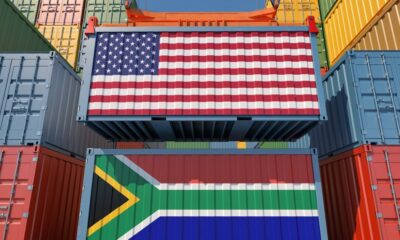
The looming loss of South Africa’s preferential trade status with the United States under the African Growth and Opportunity Act (AGOA) from January 2027 has placed increased urgency on the country’s automotive industry to rethink its growth model. With rising international competition and higher global trade barriers, industry leaders argue that now is the moment to prioritise local strength over solely pursuing overseas markets.
Shortfall in Local Content Targets
The South African Automotive Masterplan (Saam) 2035 set an ambitious goal of achieving 48.2% local content in vehicle manufacturing by 2025. However, recent figures reveal that actual local content has stagnated at just 39%, scarcely above the 38.7% level seen in 2015. This gap highlights a longstanding challenge: South Africa assembles new vehicles, but does not produce enough of their components locally to maximise economic benefits.
Industry Leaders Call for Full-Lifecycle Localisation
Henk Ferreira, acting chief executive of the Retail Motor Industry Organisation (RMI), emphasises that the sector must look beyond merely assembling new cars if it hopes to survive and thrive in a shifting trade landscape. According to Ferreira, “international trade developments underline how important it is that we build a stronger domestic manufacturing base.”
Ferreira suggests that localisation efforts should extend through the entire vehicle lifecycle, not only new assembly. This means expanding into component manufacturing, commercial vehicle body and trailer construction, remanufacturing, maintenance and repair, and the advancement of technical skills.
Remanufacturing: Creating Value Beyond the Factory Floor
The commercial vehicle sector demonstrates clear potential for these ambitions. In the first nine months of 2026, 25,139 medium, heavy, and extra-heavy trucks and buses were sold in South Africaa year-on-year increase of 8.5% according to Naamsa. Yet, due to the diverse platforms in this sector, producing major components like engines and cabs locally can be impractical at scale.
Ferreira advocates instead for building on South Africa’s existing capabilities, especially in remanufacturing high-value components such as turbochargers, cylinder heads, and diesel fuel injection systemsa focus area for the Automotive Remanufacturers’ Association (ARA).
“Remanufacturing retains the engineering and material value already embodied in a component while adding local machining, testing, specialist labour and technical expertise.”
Beyond initial assembly, commercial vehicles have long working lives. Significant economic value can be captured through local remanufacturing, maintenance, and repair activitiesall contributing to jobs, small business growth, fleet reliability, and logistics sector resilience.
The Need for Policy Evolution
To promote growth in these areas, Ferreira stresses the importance of recognising remanufacturing as equivalent to new manufacturing within official policy and incentive frameworks. This would help create a more supportive environment for local enterprises making vital investments.
Another opportunity lies in South Africa’s established commercial vehicle body and trailer manufacturing industry. Members of the South African Vehicle and Bodybuilders’ Association (Savaba) produce specialised vehiclessuch as tankers, tippers, and armoured unitsto national standards. Savaba is currently in discussion with authorities about the impact of ready-built imports, aiming to ensure that local businesses with proven capability are prioritised in procurement decisions.
Commercial Viability: Localising for Competition, Not Just Compliance
A study by EY for the Localisation Support Fund values the domestic automotive aftermarket at R106 billion as of 2025, citing batteries, glass, and brake friction products as top candidates for further localisation. Ferreira emphasises that local production must remain commercially sustainablethe goal is not to localise at any cost, but to equip businesses to compete successfully on quality, price, reliability, and performance.
He notes that where local manufacturers can meet required standards, it is vital to ensure that imported products are held to the same safety and technical benchmarks. This creates a level playing field that supports industry growth without sacrificing product quality for end users.
Bridging the Technical Skills Gap
Technical skills remain a linchpin of a durable, localised manufacturing sector. RMI data shows a worrying 8.3% drop in qualified artisans between 2019 and 2023. To counter this, new initiatives are underway: a pilot Automotive Machinist Occupational Trade Qualification is being tested, a Diesel Fuel Injection Technician apprenticeship revived with Bosch SA, and over 1,500 learners supported across five regions in 2025.
Ferreira indicates that the industry is committing its expertise and facilities to train the next generation, but warns that without adequate funding for apprenticeships, modern testing centres, and skilled assessors, the potential pipeline of artisans could stall. Stronger collaboration between government and industry is needed to close these gaps.
A Practical Partnership for the Future
The RMI proposes a focused partnership with government around six priorities:
- Integrating commercial vehicles throughout the automotive policy review
- Formally recognising remanufacturing as manufacturing
- Using public fleet procurement to reward lifecycle value and local economic contribution
- Full funding for artisan development pathways
- Applying consistent safety and technical standards to imported products
- Supporting existing local body and trailer makers in trade decisions
Ferreira summarises,
“These are practical opportunities for government and industry to work together. They are about making better use of existing capability, improving the conditions for investment and ensuring that localisation is commercially viable over the long term.”
With AGOA preferences set to expire, the automotive sector’s path to resilience increasingly relies on how effectively local businesses can capture value, create jobs, and ensure competitiveness through holistic localisation. The challenge is not merely to assemble more vehicles, but to unlock economic potential throughout their entire lifecycle and build the next generation of skilled South African artisans.
Follow Joburg ETC on Facebook, Twitter, TikTok and Instagram
For more News in Johannesburg, visit joburgetc.com
Source: iol.co.za