education
KZN reaches 2.9 million school enrolments for 2026

KwaZulu-Natal has quietly pulled off a milestone that many provinces still struggle to reach. Before the 2026 academic year has even found its rhythm, more than 2.9 million pupils are already enrolled across the province’s public schools. It makes KZN the first province in South Africa to officially meet its enrolment target for the year, a moment the Department of Education is treating as both a win and a warning.
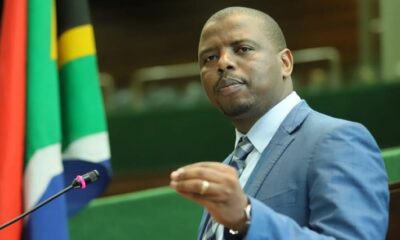
Education MEC Sipho Hlomuka shared the news during a media briefing at Addington Primary School in Durban, a location that has recently found itself at the centre of heated debates about space, safety, and access to education. The setting was fitting. The numbers tell one story of progress, but the realities on the ground are far more complex.
A province-wide effort that paid off
According to the provincial education department, a total of 2 918 003 pupils have been successfully placed for the 2026 school year across all 12 districts in KwaZulu-Natal. Hlomuka credited sustained coordination between schools, district offices, parents, and local communities for what he described as a largely smooth enrolment process.
For many families, especially in urban centres like Durban and Pietermaritzburg, early placement has become a growing concern over the past decade. Schools filling up before applications close, long queues, and last-minute transfers have become all too familiar. This year, the department says those pressure points were significantly reduced.
While officials have expressed pride in being first to the finish line, Hlomuka was clear that enrolment alone does not guarantee quality education. Getting children into classrooms is only the first step. What happens once they sit down at a desk matters just as much.
Riding the high of historic matric results
The strong start to 2026 builds on what was already a standout year for KZN. In 2025, the province achieved something it had never done before. It ranked as South Africa’s top-performing province in the matric results.
That achievement has raised expectations. Hlomuka congratulated the class of 2025 for setting a new benchmark, but he also cautioned that staying at the top would require consistency, discipline, and support throughout the system. The class of 2026, he said, carries the responsibility of protecting that legacy.
Behind the scenes, the department has already begun analysing last year’s results. The goal is to refine a 2026 Academic Improvement Plan with a sharper focus on mathematics, physical sciences, technical subjects, and South African Sign Language.
Textbooks, teachers, and tight budgets
On the practical side of schooling, the department confirmed that the rollout of learning and teaching support materials is underway in phases. Priority has been given to Grade R learners, foundation phase pupils, and Grade 12s, where early access to materials can make a measurable difference.
However, the financial reality remains tight. The department is working with a budget of R62.989 billion for the current financial year. Almost 89 percent of that goes towards salaries for teachers and administrative staff. Just 4 percent is transferred directly to schools.
Hlomuka acknowledged that rising compensation costs have limited the department’s ability to appoint additional educators. The pressure has also contributed to delayed payments to service providers and slower delivery of textbooks and stationery in some areas.
School safety and the Addington flashpoint
School safety emerged as one of the most sensitive issues raised during the briefing. Hlomuka voiced concern about increasing crime in and around schools, as well as recent protests at Addington Primary School that disrupted teaching and learning.
He was firm in rejecting claims that foreign pupils or educators are to blame for overcrowding or poor academic performance. Department figures show that Addington Primary has 1,548 pupils, including 968 South Africans and 580 foreign nationals. Of the 17 undocumented pupils at the school, the majority are South African children.
Hlomuka described misinformation around the issue as dangerous and warned against turning schools into sites of social conflict.
What happens next
To address the immediate fallout from the protests, the department has committed to extraordinary interventions for a small group of affected learners. Eleven Grade R pupils will be placed at a nearby early childhood development centre at reduced cost, while solutions for other grades are still being finalised.
The MEC appealed to parents and communities to engage through official channels and to prioritise the well-being of pupils and teachers.
For KwaZulu-Natal, reaching 2.9 million enrolments is a signal of administrative strength and community cooperation. But it also sharpens the focus on deeper challenges. Classrooms must be safe. Teachers must be supported. Learning must improve. The numbers may look impressive, but the real test of 2026 will be written in exercise books, exam halls, and school corridors across the province.
Follow Joburg ETC on Facebook, Twitter, TikT
For more News in Johannesburg, visit joburgetc.com
Source: The Citizen
Featured Image: News24