News
Maduna tells Khampepe inquiry police leadership tensions hindered TRC cases
Former minister Penuell Maduna told the Khampepe Commission that tensions between senior police leaders and lack of formal policy hindered the handling of TRC cases.
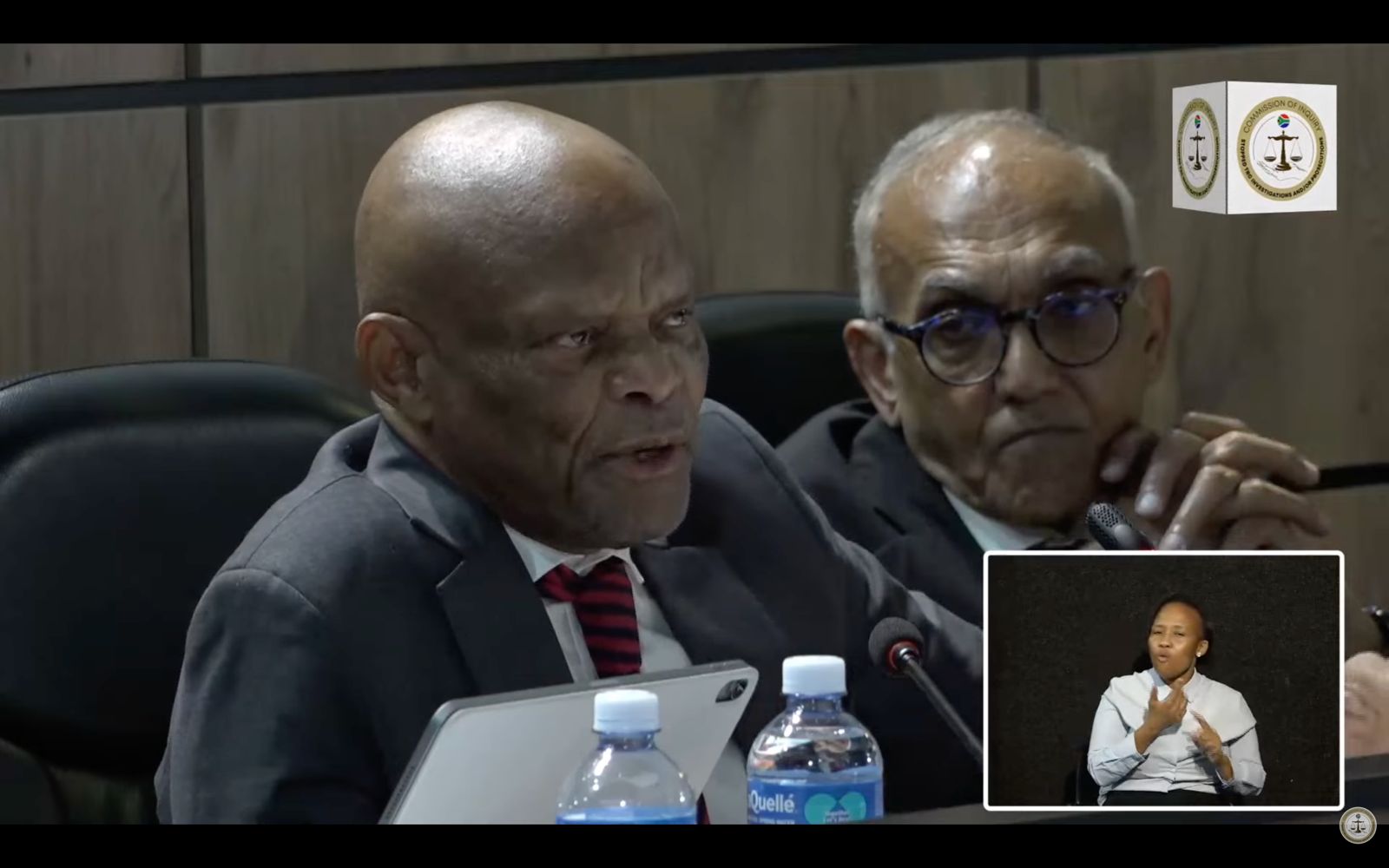
Former justice and police minister Dr Penuell Maduna told the Khampepe Commission of Inquiry that strained relations among senior law-enforcement figures and the absence of a formal government position on Truth and Reconciliation Commission (TRC) matters complicated the handling of TRC-related cases.
What Maduna told the commission
Maduna appeared before the TRC Cases Inquiry on Tuesday and described encounters and efforts at reconciliation among top officials that he said failed to resolve tensions. He said attempts to get then police commissioner Jackie Selebi to patch things up with former National Director of Public Prosecutions Advocate Bulelani Ngcuka were unsuccessful.
“Former minister Tshwete took former minister Selebi and Advocate Ngcuka to a fancy hotel in Sandton. It was to find a way to mend the two, but unfortunately they ended up wanting to hit one another,”
No formal policy and no blanket amnesty
Maduna told Justice Sisi Khampepe that there was no Cabinet position on how TRC cases would be approached at the start of the country’s democracy. He noted that the two TRC reports were finalised in 1998 and 2003, and quoted the reports as indicating there would be no blanket amnesty for perpetrators.
“There was no Cabinet position about that. The report itself pointed the way out, and it came much later than the date of the establishment of the TRC, but what was certainly discussed was that there would be no blanket amnesty for the perpetrators.”
Personal context and stance on amnesty
Speaking of his own experience as an anti-apartheid activist, Maduna said a general amnesty could not have been declared. He referred to personal suffering under apartheid and used that to explain his position.
“There were so many things happening in the country that it would not have been permissible to declare general amnesty. People suffered at the hands of the apartheid regime. I was shot in Soweto and left for dead. So, there was no way that we could guarantee general amnesty.”
On allegations of political interference
Maduna addressed claims that he or others had interfered in TRC investigations. He defended his conduct during his tenure as Justice minister between 1999 and 2004, saying conversations with both Ngcuka and former NDPP Vusi Pikoli confirmed he did not meddle in their work on TRC cases.
“I had discussions with Ngcuka and Pikoli, who was the NDPP, during my tenure as minister. They confirm that I never interfered with their work in relation to TRC cases.”
The commission adjourned after Maduna’s testimony and is scheduled to resume with a new witness on Wednesday morning.
Follow Joburg ETC on Facebook, Twitter, TikTok and Instagram
For more News in Johannesburg, visit joburgetc.com
Source: iol.co.za