Business
South Africa’s trade with Iran falls sharply a decade after oil ties ended
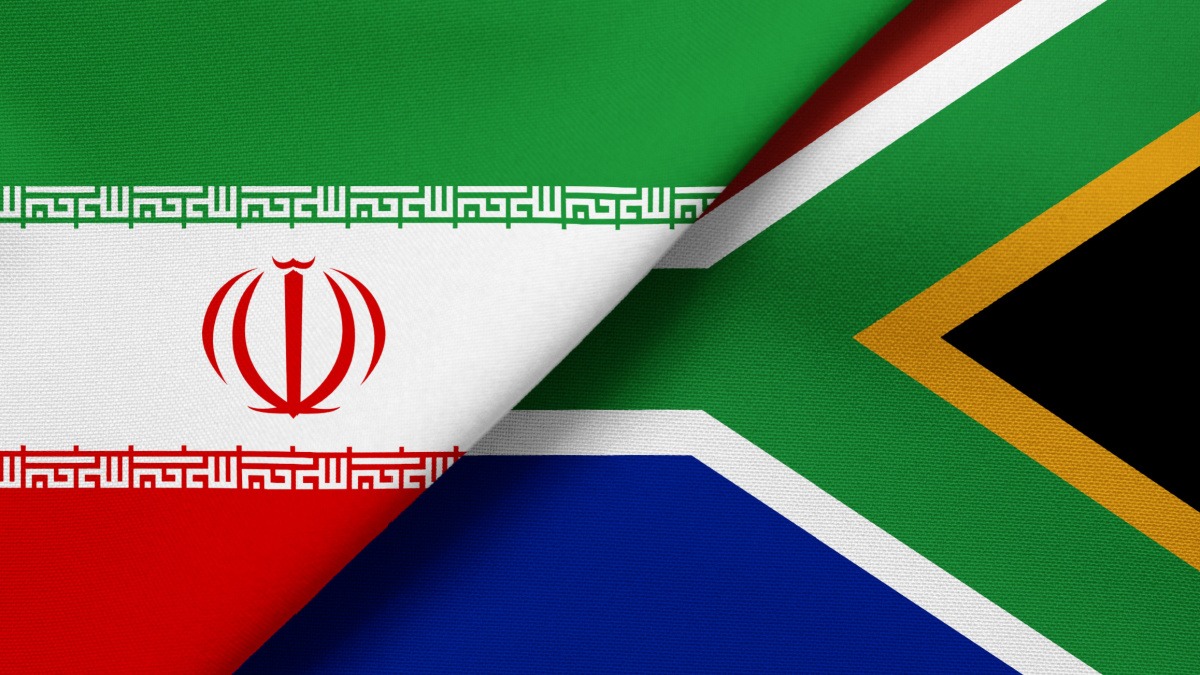
There was a time when tankers carrying Iranian crude were a familiar part of South Africa’s energy story. At its peak before 2012, Iran supplied more than 40 percent of the country’s crude oil. That relationship once placed Tehran among Pretoria’s most significant energy partners.
Fast forward more than a decade, and the numbers tell a very different story.
A trade relationship that never quite recovered
According to the latest available trade data, South Africa exported goods worth about 19.6 million dollars to Iran in 2024. By 2025, that figure had dropped sharply to roughly 6.1 million dollars.
The goods heading north are varied but modest in value. They include meat and edible offal, gums and resins, and optical and medical apparatus, as well as machinery. It is a far cry from the scale of trade that oil once represented.
Imports from Iran are even smaller. South Africa brought in goods valued at around 3.7 million dollars in 2024. These included vehicles, edible fruit and nuts, machinery, and carpets.
In the broader context of South Africa’s global trade, those figures are marginal. Trade with China, the United States, and the European Union runs into the billions each year. By comparison, Iran sits well outside South Africa’s top trading partners.
Why oil imports stopped
The turning point came in 2012. International sanctions linked to Iran’s nuclear programme prompted South Africa to halt its crude oil purchases from the Middle Eastern country. Refiners were forced to source supply elsewhere.
Although South Africa has publicly opposed those sanctions, the commercial reality reshaped trade flows. Companies adjusted supply chains, and energy ties shifted.
The impact rippled into the private sector as well. Sasol, which previously held a 50 percent stake in the Arya Sasol Polymer Company in partnership with Iran’s Pars Petrochemical Company, sold its stake in 2013. It marked the end of a significant corporate link between the two economies.
A new chapter in refinery cooperation
Despite the limited trade volumes today, diplomatic engagement has not stalled.
In August 2023, the foreign ministers of Iran and South Africa signed a cooperation agreement focused on developing and equipping five refineries in South Africa. Under the deal, Iran’s Oil Ministry is set to provide technical and engineering services to support refinery development.
For a country grappling with ageing infrastructure and periodic fuel supply pressures, refinery upgrades are not a small matter. While the agreement does not signal a return to pre-2012 oil imports, it suggests that energy cooperation remains on the table in a different form.
In Joburg’s business circles, the reaction has been cautious. Analysts point out that geopolitical risks and sanctions still shape what is possible in practice. Others see the agreement as part of South Africa’s broader strategy to diversify partnerships beyond traditional Western markets.
Rising tensions, rising oil prices
The global picture has added another layer of complexity. The current conflict involving Iran, with the United States and Israel launching a coordinated military offensive over Iran’s nuclear ambitions, has pushed oil markets into volatility.
Brent crude recently climbed to 82.45 dollars a barrel after hovering below 80 dollars the day before. For South Africans already sensitive to fuel price hikes, that jump is not just a number on a trading screen. It filters through to transport costs, food prices, and the everyday cost of living.
Even though Iran is no longer a major oil supplier to South Africa, instability in the region still affects global prices and, by extension, local wallets.
The weight of history
The relationship between the two countries stretches back decades and is layered with political history.
In 1979, Iran severed official relations with South Africa and imposed a trade boycott in protest against apartheid. Yet Iran also supported South African liberation movements during that era. Diplomatic relations were formally restored in January 1994, when Iran lifted all trade and economic sanctions against South Africa.
That shared history continues to influence diplomatic ties today, even if commercial flows remain limited.
So, where does this leave South Africa?
More than ten years after oil imports stopped, trade between South Africa and Iran is modest and declining in value. Energy ties have shifted from crude shipments to technical cooperation. Corporate links have thinned. Global politics remain a powerful factor.
For ordinary South Africans, the story is less about bilateral trade figures and more about what happens at the fuel pump and in the grocery aisle. Oil prices rising on global tensions are felt far more directly than the contents of a customs manifest.
Still, in a world where alliances are being redrawn and emerging economies are seeking new partnerships, the South Africa-Iran relationship remains one to watch. Not because of its current size, but because of what it once was and what it could become if geopolitical winds shift again.
Follow Joburg ETC on Facebook, Twitter, TikT
For more News in Johannesburg, visit joburgetc.com
Source: IOL
Featured Image: Daily Investor