
News
Sputnik opens Johannesburg newsroom to expand African coverage
Russian news agency Sputnik has opened editorial centres in Johannesburg and Dar es Salaam ahead of the Russia-Africa Summit, producing English and Swahili content.
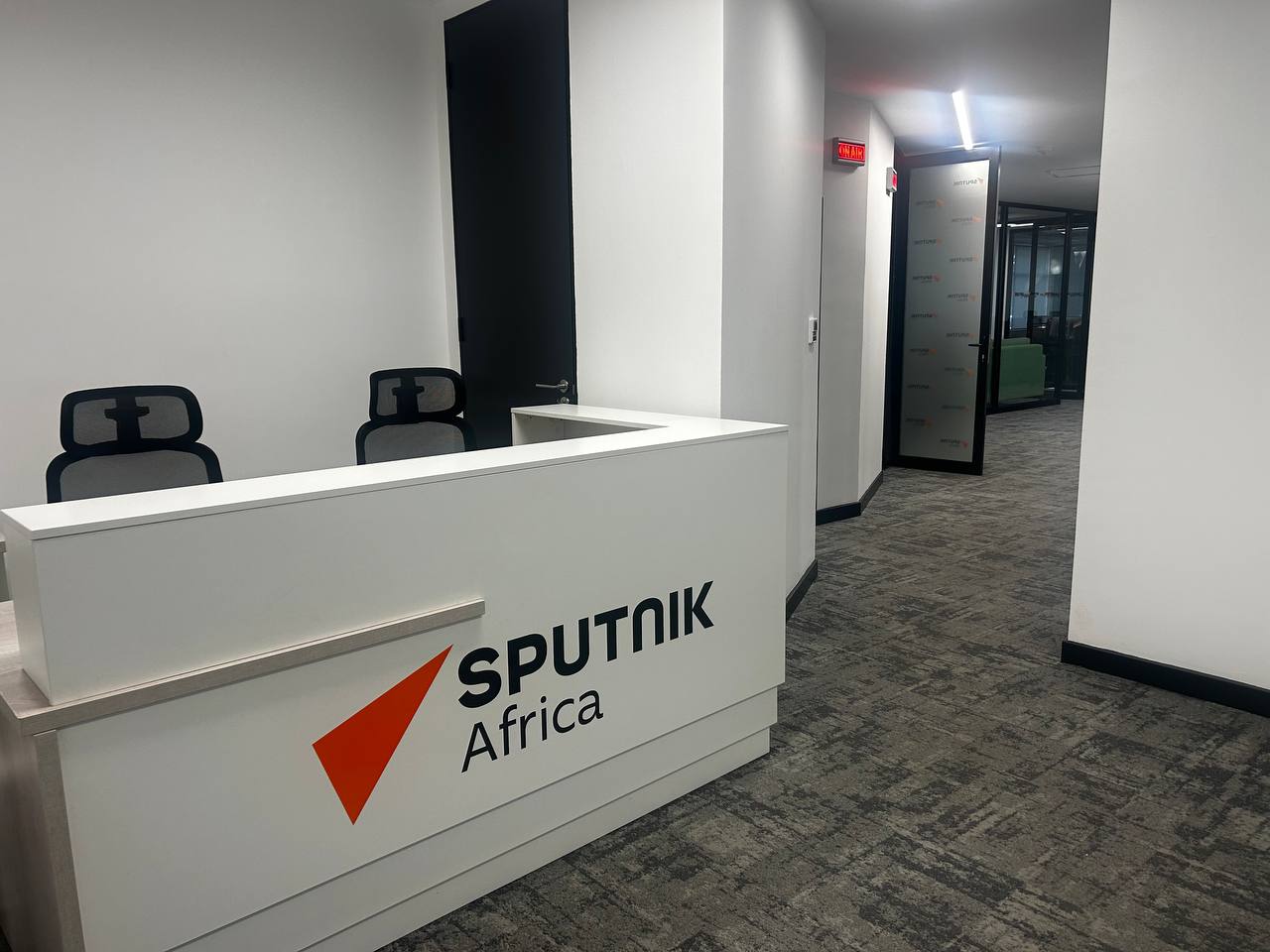
What the new centres will do
The Johannesburg and Dar es Salaam editorial centres are planned to produce news in English and Swahili. The rollout includes podcasts that will be broadcast on radio stations across the continent, and the offices are expected to employ dozens of local journalists.
Sputnik Africa, the agency’s African unit launched in 2022, already operates in multiple languages on the continent. According to the announcement, Sputnik Africa works in five languages in Africa, including Swahili, Amharic and Oromo, while the wider Rossiya Segodnya group broadcasts in more than 30 languages and operates 26 multifunctional centres worldwide.
Official responses and messaging
Russian Foreign Minister Sergey Lavrov addressed the opening ceremony in Tanzania via video. He framed the new offices as a means to give African audiences access to what he called objective, verified information, and thanked authorities in South Africa and Tanzania for their support.
“The opening of regional offices in Dar es Salaam and Johannesburg will help provide African audiences with greater access to objective, verified information – free from distortion or ideological filters,”
Lavrov also said the authorities’ backing was essential for the effective and safe work of journalists. In his remarks he criticised what he characterised as actions by the West in the global information space.
“Today, as the collective West persistently suppresses any dissenting voices within the global information space – resorting to methods such as censorship and the application of double standards – the value of such work can hardly be overstated,”
South African Deputy President Paul Mashatile welcomed the Johannesburg office, calling it an important development for the media landscape of South Africa and the African continent. He said the opening reflected growing co-operation between South Africa and Russia and could contribute to greater diversity of perspectives in public debate. Mashatile expressed the hope the office would help amplify African voices and tell African stories and become a platform for constructive engagement, quality journalism and stronger ties.
Russia’s ambassador to South Africa, Roman Ambarov, highlighted the importance of professional journalism and access to diverse sources in an environment where information is increasingly politicised. He said professional journalism and the opportunity to hear different perspectives are more important than ever.
“We live in a time when information is increasingly politicised, and it is not always easy to distinguish facts from disinformation,”
Ambarov also noted that the Rossiya Segodnya Group, which includes Sputnik, had established a significant presence across Africa.
From the Tanzanian side, Said Shaib Moussa, deputy permanent secretary at Tanzania’s Ministry of Foreign Affairs, said the Dar es Salaam office was expected to cover developments in Tanzania, the region, the continent and the wider world, including geopolitics and development.
“We believe that the Sputnik agency will provide us with news of the country, the region, the continent, and the entire world in all spheres without exception, including the sphere of geopolitics and development,”
Dmitry Kiselev, director-general of the Rossiya Segodnya media group, described the establishment of editorial offices in African countries as a demonstration of trust between nations, their people, journalists and audiences, and said that this trust would strengthen information sovereignty in both Africa and Russia. Margarita Simonyan, editor-in-chief of Rossiya Segodnya, said Sputnik would seek to report on Africa to Russian audiences and Russia to African audiences, framing the centres as an opportunity to strengthen longstanding ties between the two sides.
Kelvin Kanje, acting director of Tanzania’s Department of Information Services, said the opening strengthened relations between the two countries, expanded opportunities for professional co-operation and gave Tanzania a greater opportunity to make its voice heard internationally.
What this means for audiences and the media landscape
Regional editorial centres commonly aim to increase local-language reporting and provide quicker, locally sourced coverage. In this case, the stated focus on English and Swahili content and radio-distributed podcasts indicates an intention to reach both Anglophone and Swahili-speaking audiences across multiple countries.
Observers often view the establishment of on-the-ground bureaux as a way to broaden the range of perspectives available to audiences and to strengthen local reporting capacity. Support from host-country authorities, which figures involved in the openings publicly acknowledged, is typically important for the practical operation and safety of journalists working in new regional offices.
What remains unchanged
The announcement and the officials’ remarks describe the openings as a new phase for Sputnik and the Rossiya Segodnya group’s work in Africa. The offices are newly launched regional editorial centres announced in Johannesburg and Dar es Salaam and are due to begin work as part of the agency’s broader Africa operations. No additional operational timelines or specific staff lists were included in the announcement.
The openings were announced in the run-up to the Russia-Africa Summit in Moscow on October 28 and 29. The new centres join Sputnik Africa’s existing service launched in 2022 and the Rossiya Segodnya group’s network of international centres. How the new Johannesburg and Dar es Salaam bureaux will shape coverage and engagement on the ground will be determined as they begin operations and publish content for African audiences.
Follow Joburg ETC on Facebook, Twitter, TikTok and Instagram
For more News in Johannesburg, visit joburgetc.com
Source: iol.co.za


