News
Chaskalson says Madlanga Commission cannot set aside intelligence classifications; Sifolo ruling reserved
Matthew Chaskalson told the Madlanga Commission it cannot overturn intelligence classification decisions as a ruling on Dr Ntandazo Sifolo’s closed‑door testimony is reserved.
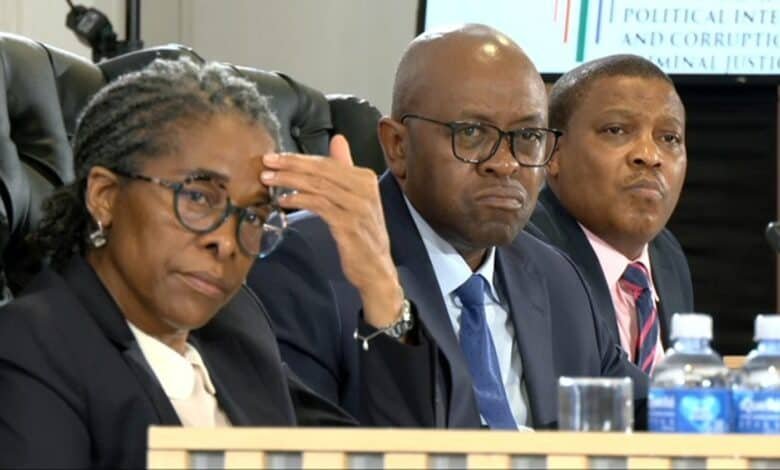
What Chaskalson told the commission
Chaskalson emphasised that the Madlanga Commission is not a high court and does not possess the power to overturn classification decisions or to change the terms under which classified material is declassified. He told the panel:
“The commission is not a high court. It has no power to set aside a decision to classify information or to override a decision on the terms on which classified information is declassified. The commission does not have that power.”
He also said that Sifolo must still be consulted about whether he consents to the proposed arrangements for how his testimony would be given.
What material is at issue
The commission is being asked to consider testimony that would rely on a substantial body of sensitive material. The proposed package includes:
- Four national intelligence estimates issued between 2022 and 2025;
- Eleven intelligence briefs;
- A special report; and
- Minutes and reports from NICOC meetings held in 2025.
According to the application before the commission, these materials amount to hundreds of pages of potentially sensitive intelligence information.
Opposition from media representatives
Media representatives challenged the request for a private hearing. They argued that the public has a right to understand the subject and import of the documents that would form part of Sifolo’s testimony. That opposition frames the issue as a tension between transparency and the protection of classified intelligence.
How the commission’s decision matters
The commission has reserved judgment on the application and is expected to issue a ruling in the coming days. That decision will determine whether Dr Sifolo’s testimony proceeds behind closed doors as requested, or whether the witnesses and documents must be handled under other arrangements that allow some public oversight.
The practical consequence of the commission’s ruling will be to settle which forum controls access to these classified records during the inquiry: whether the commission accepts that classification decisions stand, or whether an alternative path is required before sensitive material can be used in the public proceedings.
Why classification powers matter in commissions of inquiry
Commissions typically gather evidence from a wide range of sources. When material is classified by state authorities, courts frequently play a formal role in adjudicating disputes over access, especially where national security is invoked. Chaskalson’s core point is procedural: the power to set aside a classification decision is a judicial function, not one he attributed to the commission.
This distinction matters because it sets the legal route for any party seeking to challenge the confidentiality of intelligence documents. If a commission cannot itself overturn classifications, those seeking access may need to pursue remedies in a court with the authority to review and set aside executive classification decisions.
Balancing transparency and security
The present dispute illustrates a common dilemma for public inquiries: the public interest in openness versus the state interest in protecting sensitive intelligence. Transparent hearings can strengthen public trust in outcomes, but unrestricted disclosure of classified material can raise genuine security concerns.
How that balance is struck often depends on procedural safeguards, compartmentalisation of sensitive details, and whether witness consent can be obtained. In this instance, Chaskalson pointed to the need for Sifolo’s consultation and consent as an additional procedural step.
What to expect next
The commission has reserved judgment and is expected to issue a ruling shortly. That ruling will set the terms if any under which Dr Sifolo’s testimony and the related documents can be considered by the inquiry. Until the commission rules, the question of whether those hundreds of pages of intelligence material will be heard in public remains open.
Key facts: Chaskalson said the commission is not a high court and cannot set aside classification decisions; the evidence package includes documents from 2022–2025; media opposed a private hearing; the commission has reserved judgment with a ruling expected in the coming days.
Follow Joburg ETC on Facebook, Twitter, TikTok and Instagram
For more News in Johannesburg, visit joburgetc.com
Source: iol.co.za