News
R186m GBV budget risks becoming lip service, warns Action Society
Action Society warns R186m earmarked for forensic and investigative work may fail victims unless Treasury publishes a detailed, costed implementation plan and deadlines.

What was announced in the budget statement
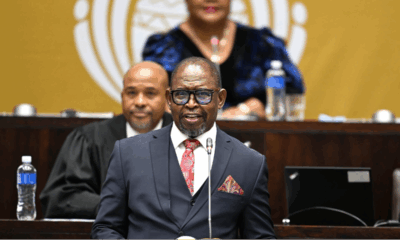
In his presentation to the National Assembly, the finance minister said government would make at least R4 billion available for interventions addressing the causes and consequences of gender-based violence and femicide (GBVF). That package included a pledge of R3.8 billion to employ 3 500 social workers to bolster prevention efforts, and an allocation of R186 million specifically for forensic and investigative capacity.
The statement also set out funding of R157 million for the Department of Women, Youth and Persons with Disabilities to strengthen oversight of the GBVF response, and targets to increase specialised sexual offences courts from 55 to 101 and Thuthuzela Care Centres from 72 to 80. The increase in courts and care centres was presented as targets for 2029, rather than immediate, guaranteed openings.
Action Society: numbers need a plan
Action Society’s national spokesperson, Juanita du Preez, welcomed parts of the package but urged that the headline numbers are not sufficient on their own. She said the state cannot expect credit for attaching a monetary value to commitments without showing how that money will be applied.
“Government cannot expect applause simply for attaching a rand value to its promises,” said Juanita du Preez, national spokesperson for Action Society.
The organisation said the R186 million allocation lacks basic delivery details: it does not specify how much will reach specialist police units or forensic laboratories, which vacancies will be filled, or what improvements victims should expect and by when. Action Society wants Treasury and the responsible departments to publish:
- funding periods and departmental breakdowns for the allocation;
- recruitment and deployment plans for analysts, detectives and other specialists;
- forensic turnaround targets and deadlines for stalled cases.
“A woman waiting for DNA results or a family watching a murder case stall needs to know when the evidence will be processed and who is responsible for moving the investigation forward.”
Questions left unanswered
Action Society underlined several specific questions it says the budget speech did not answer. The group asked what assessment led to the R186 million figure, how many additional analysts and specialist detectives that sum will fund, and what measurable reduction in backlogs the money is expected to purchase.
“The public deserves to know how government decided that R186 million would meet the forensic and investigative needs identified in its GBVF response,” said Du Preez. “What assessment informed this amount? How many additional analysts and specialist detectives will it fund? What reduction in backlogs will it purchase? The speech leaves these questions unanswered.”
Comparison with other security spending
Action Society contrasted the R186 million with a larger allocation elsewhere in the budget: R823 million set aside for military assistance to police in operations against gang-related crime and illegal mining. The organisation said that the larger allocation shows government can mobilise substantial resources quickly when it chooses to do so, and that a similar level of urgency should apply to the sustained investigative work required in GBV cases.
Why forensic capacity matters
Forensic and investigative capacity is a crucial link between reporting a crime and securing convictions. In broad terms, delays in processing evidence and shortages of specialist investigators can stall prosecutions, prolong trauma for victims and families, and reduce the likelihood of timely justice. Action Society emphasised that support services and more courts are important but cannot substitute for the detectives and laboratory capacity needed to move cases to trial.
“Social workers cannot replace detectives, and additional courts cannot resolve cases that never reach trial because evidence is outstanding,” said Du Preez. “Government must fund and repair the entire route from reporting an offence to securing a conviction.”
Public-private partnerships proposed
To address forensic backlogs, Action Society proposed that government incorporate accredited private laboratories and technical experts into a structured programme to process evidence and strengthen capacity. The organisation said this should be done in parallel with continued investment in public laboratories and investigators, under clear standards and state accountability.
“The same speech promotes public-private partnerships for infrastructure,” Du Preez said.
Action Society set out expectations for such partnerships to operate with transparent measures of performance and oversight:
- structured, accountable roles for private providers;
- measurable results tied to forensic turnaround times and cleared backlogs;
- ongoing public investment to maintain state laboratory capacity.
“These partnerships must operate alongside sustained investment in public laboratories and specialist investigators, with clear standards, state accountability and measurable results.
Women and children need permanent improvements that survive beyond a budget speech or a temporary deployment.
Without a funded delivery plan and public accountability, these announcements remain promises. Government must show exactly how this money will make victims safer and justice more certain.”
What comes next
Action Society has called on Treasury and the departments responsible for the GBVF response to publish detailed, costed implementation plans that answer the questions it has raised. The organisation seeks clear timelines, staffing and procurement plans and public targets so citizens can monitor whether allocations translate into faster forensic turnaround, cleared backlogs and cases moving to prosecution.
Those demands reflect a commonly cited expectation in public budgeting: that figures in a speech should be matched by plans that explain who will do the work, when it will be completed and how success will be measured. Where such plans are absent, commitments risk becoming statements of intent rather than operational changes that deliver safer outcomes for victims.
This report draws exclusively on statements and figures presented in the Medium-Term Budget Policy Statement as reported in Parliament on 22 October 2026 and on responses from Action Society quoted directly in the source material.
Follow Joburg ETC on Facebook, Twitter, TikTok and Instagram
For more News in Johannesburg, visit joburgetc.com
Source: citizen.co.za