Business
Fuel price shock hits South Africa as drivers rethink how they travel
There is a certain tension in Joburg traffic this week. You feel it at the petrol station before you even reach the pump. A glance at the price board tells the whole story.
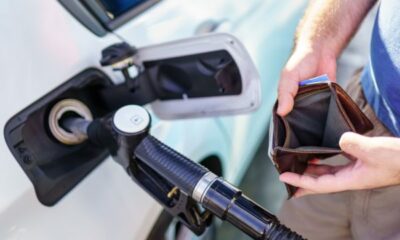
South Africans woke up to one of the sharpest fuel hikes in recent memory on 1 April 2026. Petrol 95 is now sitting at R23.36 a litre, while diesel has climbed to R25.35 at the wholesale level. For many households, that is not just a number. It is a shift in how the month will be planned.
And the uncomfortable part is that this might not be the end of it. Early signals suggest another increase could be on the cards in May, adding to the pressure on already stretched budgets.
A global problem, but a very local pinch
South Africa is not alone in this situation. Rising global oil prices have pushed countries everywhere to rethink how fuel is used. But here at home, where commuting distances are long and public transport options vary, the impact feels especially sharp.
It is why practical, everyday solutions are starting to dominate the conversation. Not big policy changes, but small shifts in behaviour that can actually move the needle on your monthly fuel spend.
Work from home is back in the spotlight
For many South Africans, working from home once felt like a lockdown necessity. Now it is quietly becoming a financial strategy.
Experts suggest that adding just a few remote working days each week can significantly cut fuel use. On an individual level, it can reduce commuting fuel consumption by as much as 20 percent.
There is also a broader shift happening. Businesses that adapted during the pandemic already have the systems in place. That makes it easier to bring flexible work back into the mix when costs spike like this.
On social media, many workers are already asking the same question. If the work can be done from a laptop, why sit in traffic and burn fuel unnecessarily
Slowing down might actually save you money
It sounds simple, but it works. Driving slightly slower can make a noticeable difference.
Reducing highway speeds by around 10 kilometres per hour can lower fuel consumption by between 5 percent and 10 percent. It also has a side benefit. Safer roads.
South Africa has been here before. During the 1970s oil crisis, national speed limits were reduced to 80 kilometres per hour as a way to conserve fuel.
There is no official move to reintroduce that rule today, but the idea is resurfacing in conversations. Not as a law, but as a practical choice drivers can make themselves.
Carpooling is making a quiet comeback
If you have noticed more colleagues asking about lift clubs lately, you are not imagining it.
Carpooling is back on the table, especially in cities like Johannesburg, where long daily commutes are the norm. Sharing rides reduces the number of cars on the road, cuts fuel costs, and even helps ease congestion.
When combined with simple habits like checking tyre pressure or using air conditioning more efficiently, fuel savings can reach between 5 percent and 8 percent.
It is not a new idea, but in today’s economy, it is starting to feel like a smart one again.
Government relief helps, but only for now
The National Treasury has stepped in with a temporary R3 per litre cut to fuel levies for April. It softens the blow, bringing the petrol increase to R3.06 per litre and diesel up to R7.51.
But this relief comes at a cost to the fiscus, and it is not permanent. The expectation is that these funds will be recovered later, which means the pressure has not disappeared. It has just been delayed.
Meanwhile, the Department of Petroleum and Mineral Resources is working on longer-term solutions to address how fuel prices are structured in the country. For now, the focus is on short-term stability rather than quick fixes.
A shift in habits, not just prices
There is a bigger story here than just rising costs.
South Africans are being nudged into rethinking how they move, how they work, and how they manage daily routines. What started as a price shock is quickly turning into a lifestyle adjustment.
Driving less, driving smarter, and sharing the journey where possible. These are not dramatic changes, but together they add up.
And in a moment like this, where every litre counts, small decisions might be the most powerful ones.
Follow Joburg ETC on Facebook, Twitter, TikT
For more News in Johannesburg, visit joburgetc.com
Source: Business Tech
Featured Image: iStock