News
Majodina warns maintenance shortfalls imperil South Africa’s water supply at WISA 2026
At WISA 2026 in Cape Town, Minister Pemmy Majodina urged public-private partnerships and R400 million to fix reticulation and distribution failures driving South Africa’s water crisis.

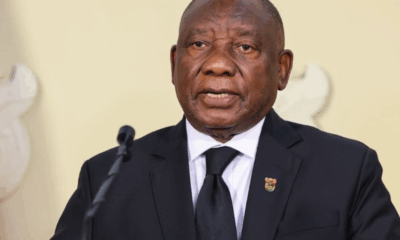
At the Water Institute of Southern Africa (WISA) 2026 Biennial Conference, Minister of Water and Sanitation Pemmy Majodina warned that failures in maintaining existing infrastructure are a central driver of South Africa’s water crisis and urged public-private partnerships and targeted investment to fix distribution and reticulation problems.
Conference draws sector to Cape Town
More than 2 000 professionals gathered at the Cape Town International Convention Centre for the three-day WISA 2026 Biennial Conference & Exhibition, organised by the Water Institute of Southern Africa. The event runs under the theme “Rethinking Amanzi – Securing Our Future” and opened with addresses from the WISA organising committee chair Ian Palmer, WISA CEO Dr Lester Goldman and Minister Majodina.
Maintenance and distribution identified as the crux
In her opening address, Majodina said the country’s biggest infrastructure challenge is maintaining what we already have. She told delegates that while South Africa has enough raw and bulk water, the crisis is in reticulation and distribution the flow of water from the tap.
“That is where the crisis is, and we need nothing less than R400 million to address that,”
she said, adding that municipalities responsible for distribution currently lack the funds and that national government likewise does not have the required money.
Calls for partnerships, ring-fencing and new approaches
Majodina urged collaboration across sectors, saying water security requires a multi-disciplinary approach bringing together scientists, economists, planners, environmental specialists and social scientists. She called for stronger public-private partnerships to invest in water and for water service authorities to ring-fence water sales for reinvestment.
“Water is everybody’s business. Water is partnership, water is us,”
she said, arguing that infrastructure alone cannot guarantee water security and that new governance models, financing mechanisms and technologies will be needed.
Mechanisms and next steps
Majodina highlighted the South African National Water Resources Infrastructure Agency (SANWRIA) as a platform for planning, financing, developing, operating and maintaining major water resource assets. She said outcomes from the conference will help build towards the 2026 United Nations Water Conference in the United Arab Emirates in December, where South Africa intends to champion water investment.
Expectation of clear commitments
After her address, Majodina said that by the conference’s end organisers want clear commitments on turning the situation around so the continent has water. She said engagements are under way with National Treasury to ensure that released funds include a percentage that is ring-fenced for reinvestment in the water sector.
Technical programme and issues on the agenda
The conference programme features more than 80 sessions covering specialist streams, workshops and high-level engagements. Topics include microplastics, groundwater resilience and managed aquifer recharge, climate resilience, droughts and floods, alternative water services and water infrastructure renewal, among others.
Majodina reflected on the timing of the event, noting that the United Nations has declared 2026 the year of water and that President Cyril Ramaphosa has declared a water crisis, framing the conference as timely for interrogating pressing issues in the sector.
Follow Joburg ETC on Facebook, Twitter, TikTok and Instagram
For more News in Johannesburg, visit joburgetc.com
Source: iol.co.za